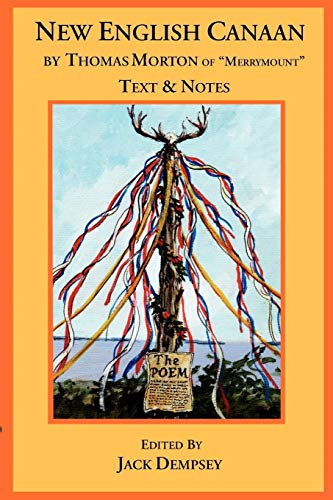
The Lives of the Poets

New Price: $15.65
Used Price: $8.33

Mentioned in:

The Millions’ Great Winter 2026 Preview

-
Winter demands that we slow down, take stock, rest. And while we hibernate, books can keep us company. Luckily, this season, there are plenty of noteworthy new reads to fill these cold, short days. Below, you’ll find 100 titles out this winter that we’re excited about here at The Millions. Some we’ve already read in galley form; others we’re simply eager to dive into based on their authors or subjects. We leaned on our friends at Publishers Weekly to help blurb some of the many, many titles that we’re eager to put on your radar. The Millions is, alas, still on hiatus, but we’re determined to continue bringing you our seasonal Most Anticipated previews in the interim (if a bit belatedly).  —Sophia Stewart, editor * January Call Me Ishmaelle by Xiaolu Guo (Black Cat) NBCC Award winner Guo delivers a spectacular retelling of Moby-Dick, in which she recasts Ishmael as a 17-year-old girl and Ahab as a Black freedman named Seneca who’s battling the “white devil.” Read more. Philosophy of Writing by David Arndt (Bloomsbury Academic) In his latest, the comparative literature professor proposes new frameworks through which to understand writing not just as a craft, but as a philosophical undertaking. Nothing Random by Gayle Feldman (Random House) This cinematic biography of Random House founder Bennett Cerf from longtime PW writer Feldman teems with a star-studded cast including Truman Capote, James Joyce, Alfred Knopf, Ayn Rand, and Dick Simon. Read more. Palinuro of Mexico by Fernando del Paso, tr. Elizabeth Plaister (Dalkey Archive) Virgil's Palinurus was Aeneas's helmsman who fell victim to the god of sleep; his namesake in this complex, beautiful novel, is also a guide to a novel that straddles the conscious and subconscious, life and death. Read more. The Last of Earth by Deepa Anappara (Random House) Edgar winner Anappara offers a vivid narrative of two 1869 expeditions into Tibet at a time when it was still closed off to outsiders and its rivers and mountains were mostly uncharted. Read more. Fire Sword and Sea by Vanessa Riley (Morrow) Riley’s exciting latest follows a young Haitian woman’s fight against slavery and her turn toward piracy. Read more. We Would Have Told Each Other Everything by Judith Hermann, tr. Katy Derbyshire (FSG) In this deeply affecting English-language debut, German writer Hermann reflects on the connections between art and experience, delving into her protagonist’s family history in West Germany and the relationships that shaped her life. Read more. The Hitch by Sara Levine (Roxane Gay) Levine serves up a bizarre and mordantly funny tale of a six-year-old who might be possessed by a dead corgi. Read more. This Is Where the Serpent Lives by Daniyal Mueenuddin (Knopf) Mueenuddin’s lavish sophomore effort spans six decades and traces the lives of a wealthy Pakistani clan and those who work for them. Read more. The School of Night by Karl Ove Knausgaard, tr. Martin Aitken (Penguin) In Knausgaard’s ingenious fourth entry in the Morning Star series, a self-absorbed Norwegian photographer strikes a Faustian bargain in exchange for success. Read more. The Snakes That Ate Florida by Ian Frazier (FSG) In this substantial yet brisk collection, essayist and humorist Frazier compiles highlights from his half-century career at the New Yorker and other outlets. Read more. Strangers: A Memoir of Marriage by Belle Burden (Dial) Immigration lawyer Burden traces the exhilarating start and excruciating dissolution of her two-decade marriage in this bruising debut. Read more. Pedro the Vast by Simón López Trujillo (Algonquin) In Trujillo’s equally heady and thrilling sci-fi debut, panic attack–prone mycologist Giovanna Oddó is summoned to a provincial Chilean hospital to consult on a strange case of “lethal blight” believed to be caused by the mushroom Cryptococcus gatti. Read more. The Old Fire by Elisa Shua Dusapin, tr. Aneesa Abbas Higgins (Summit) In the quietly affecting latest from Dusapin, two sisters reunite to clear out their family home in the French countryside. Read more. Discipline by Larissa Pham (Random House) Pham, author of the memoir Pop Song, turns to fiction with the dazzling story of an art critic who publishes a novel about the former professor who rejected her after their affair. Read more. Eating Ashes by Brenda Navarro, tr. Megan McDowell (Norton) The grieving unnamed narrator of Mexican writer Navarro’s spellbinding U.S. debut ruminates on the effects of migration. Read more. Scale Boy by Patrice Nganang (FSG) In this gorgeous memoir, Cameroonian novelist Nganang chronicles his coming of age in the 1970s and ’80s and his decision to pursue a literary life. Read more. Fanny Hill: Or, Memoirs of a Woman of Pleasure by John Cleland (Unnamed) Banned from publication in the U.S. until 1966, Cleland’s erotic novel from 1749 offers an account of a woman’s early days of prostitution in 18th-century London. Iconophages by Jérémie Koering, tr. Nicholas Huckle (Princeton UP) In this adroit English-language debut, Koering, an art history professor at the University of Fribourg in Switzerland, surveys the long and surprising tradition of how “figured representations” have been ritualistically consumed. Read more. One Aladdin Two Lamps by Jeanette Winterson (Grove) Critic and fiction writer Winterson anchors this dazzling memoir-in-essays in her childhood obsession with One Thousand and One Nights, the collection of Middle Eastern folktales that introduced magic lamps and flying carpets to the West. Read more. When Trees Testify by Beronda Montgomery (Holt) Plant biologist Montgomery mixes memoir, history, and science in this unique examination of the significance of trees in Black history. Read more. The Flower Bearers by Rachel Eliza Griffiths (Random House) In her stunning debut memoir, poet and novelist Griffiths details the most challenging period of her life, during which her best friend died and her husband, the author Salman Rushdie, was brutally attacked. Read more. Crux by Gabriel Tallent (Riverhead) This tense and staggering tale of rock climbing and family demons from Tallent explores the cost of following one’s dreams. Read more. Beckomberga by Sara Stridsberg, tr. Deborah Bragan-Turner (FSG) Stridsberg’s singular novel traces the history of Stockholm’s Beckomberga psychiatric asylum via wrenching stories of its patients. Read more. How to Commit a Post-Colonial Murder by Nina McConigley (Pantheon) McConigley follows her PEN/Open Book Award–winning collection, Cowboys and East Indians, with a witty and ultimately profound tale centered on two angsty preteens’ plot to kill their abusive uncle. Read more. Just Watch Me by Lior Torenberg (Avid Reader) Torenberg debuts with a bewitching tragicomedy about a young woman who takes drastic actions to raise money for her sister’s medical bills. Read more. A Very Cold Winter by Fausta Cialente, tr. Julia Nelsen (Transit) In this overdue translation of Cialente’s vital 1966 novel, her first to be published in English, a family struggles to find harmony while crammed together in a frigid Milan squat. Read more. Station of the Birds by Betsy Sussler (Spuyten Duyvil) In the author's latest, a son disinherited by his father while attending college returns to his hometown with an eye toward vengeance. Vigil by George Saunders (Random House) A ghost attempts to guide an unrepentant oil executive toward redemption and the afterlife in the staggering latest from Saunders. Read more. A Hymn to Life by Gisèle Pelicot, tr. Natasha Lehrer and Ruth Diver (Penguin) Pelicot, who first rose to prominence after waiving her right to anonymity in the court case against her husband and 50 men accused of sexually assaulting her, tells her story for the first time in this harrowing, galvanizing memoir. Black Dahlia by William J. Mann (S&S) Novelist and biographer Mann delivers a meticulous and humane reconsideration of one of America’s most sensationalized unsolved murders. Read more. Rooting Interest by Cat Disabato (831 Stories) In this sapphic sports romance from Disabato, NFL reporter Jennifer Felix is reassigned to cover WNBA All-Star Weekend, despite knowing nothing about basketball. Read more. February Lee and Elaine by Ann Rower (Semiotext(e)) In this second novel by Rower, the artistic and social excesses of the New York School painters—Jackson Pollock, Lee Krasner, Willem de Kooning and Elaine de Kooning—provide a welcome obsession for a painter in a midlife crisis. Read more. The End of Romance by Lily Meyer (Viking) Critic and translator Meyer’s sharp and sexy sophomore novel chronicles a young woman’s liberation from an abusive marriage. Read more. Language as Liberation by Toni Morrison (Knopf) In this series of lectures from the Nobel laureate’s tenure as a professor at Princeton, Morrison examines Black characters throughout American literature and their impact on our national imagination. Superfan by Jenny Tinghui Zhang (Flatiron) Zhang explores the line between fandom and idol worship in her sharp sophomore outing. Read more. The People Can Fly by Joshua Bennett (Little, Brown) Bennett charts the complex role of Black prodigies and gifted children in American history, including by tracking the early educations of luminaries ranging from Malcolm X to Stevie Wonder. Second Skin by Anastasiia Fedorova (Catapult) Toggling between memoir, reportage, social history, cultural criticism, and erotic writing, Fedorova maps the worlds of sexual fetishism and kink, considering the the forces that shape desire, and how desire shapes us. Autobiography of Cotton by Cristina Rivera Garza, tr. Christina MacSweeney (Graywolf) Memoirist and novelist Rivera Garza weaves labor history, environmental catastrophe, and stories of her family into a vivid tapestry. Read more. A Killing in Cannabis by Scott Eden (Spiegel & Grau) Investigative journalist Eden shines in this novelistic work of true crime, which opens in 2019, when deputies responded to a 911 call reporting a kidnapping in Santa Cruz, Calif., at the home of tech CEO Tushar Atre, who’d recently launched a cannabis company. Read more. Heap Earth Upon It by Chloe Michelle Howarth (Melville House) Howarth captures the rhythms and underlying tensions of an Irish village through the eyes of multiple characters in her alluring sophomore outing. Read more. Ladies Almanack by Djuna Barnes (Dalkey Archive) Barnes's trailblazing work of lesbian literature—part social satire, part Restoration pastiche, part love letter to Paris—returns nearly a century after its 1928 publication courtesy of Dalkey Archive. The Wall Dancers by Yi-Ling Liu (Knopf) This incisive, empathetic debut study from journalist Liu examines three decades of the internet’s evolution in China, from the mid-1990s explosion of microblogs and message boards that corresponded with the country’s increasing liberalization, to the mid-aughts raising of the Great Firewall. Read more. Alice Baber: An Artist’s Triumph Over Tragedy by Gail Levin (Pegasus) Levin’s biography questions why Baber—whose abstract paintings had entered into the collections of the Met, Whitney, Guggenheim, and MoMA by the time she died at 54—ultimately fell into obscurity, while also restoring the artist to her rightful place in modernist history.Scatman John by Gina Waggot (Bloomsbury Academic) Music journalist Waggott debuts with an affectionate biography of John Larkin (1942–1999), better known as Scatman John, who rose to fame in the mid-1990s with a blend of jazz, pop, and scat-singing. Read more. The Jills by Karen Parkman (Ballantine) Parkman debuts with a thrilling mystery that offers an immersive view into the lives of NFL cheerleaders. Read more. Frog by Anne Fadiman (FSG) Essayist and reporter Fadiman reflects on her life and the ever-changing world around her in this affecting and often humorous collection. Read more. I Hope You Find What You're Looking For by Bsrat Mezghebe (Liveright) The nuanced debut from Mezghebe finds an Eritrean American teen seeking answers about her late father’s life as a revolutionary martyr. Read more. This is Not About Us by Allegra Goodman (Dial) Goodman delivers a bighearted linked story collection about a family’s travails. Read more. One Bad Mother by Ej Dickson (Simon Element) New York magazine writer Dickson debuts with a smart and funny exploration of what it means to be a “bad mom.” Read more.On Morrison by Namwali Serpell (Hogarth) Serpell, a novelist and professor of English at Harvard, provides an insightful and stimulating exploration of the work of Nobel Prize winner Toni Morrison. Read more. Queen by Birgitta Trotzig, tr. Saskia Vogel The first in a trio of works by the legendary Swedish writer set to be translated by Vogel, this 1964 novella follows a girl named Judit and her enigmatic inner life. Lean Cat, Savage Cat by Lauren J. Joseph (Catapult) An artist’s bohemian existence in Berlin implodes in this exquisite novel from Joseph. Read more. Evil Genius by Claire Oshetsky (Ecco) Oshetsky’s potent latest dives into the volatile inner world of a young woman who fantasizes about a life beyond her abusive marriage. Read more. Head of Household by Oliver Munday (S&S) Munday's debut story collection mines the complexity, anxieties, and daily rituals of contemporary fatherhood. The Writer's Room by Katie da Cunha Lewin (Princeton UP) Literature lecturer Lewin debuts with an insightful exploration of the spaces where famous writers crafted their most influential works. Read more. Citizenship by Daisy Hernández (Hogarth) Hernández presents a comprehensive and timely inquiry into American citizenship, weaving together memoir, history, and cultural criticism. Beloved Son Felix by Felix Platter, tr. Seán Jennett (McNally Editions) In 1552, a 16-year-old Felix Platter left Switzerland to study medicine in France, documenting his daily life in a diary—and now, contemporary readers can enjoy one of the world’s earliest journals, which chronicles everything from a brush with the bubonic plague to a John Calvin speech. A Place Both Wonderful and Strange by Scott Meslow (Running Press) The short-lived 1990 TV series Twin Peaks cast a long cultural shadow, according to this energetic account from film critic Meslow. His diligent account of the show’s cultural legacy [is interwoven] with delightful peeks into its idiosyncratic production and the eccentric directorial style of David Lynch. Read more. Daughter of Mother-of-Pearl by Mandy-Suzanne Wong (Graywolf) This mesmerizing collection from novelist and essayist Wong uses observations of small invertebrates to tackle questions about selfhood, consciousness, and humans’ relationship with nature. Read more. Everything Lost Returns by Sarah Domet (Flatiron) In Domet’s latest page-turner, two women are united across time by the arrival of Halley’s comet. Every Moment Is a Life, ed. susan abulhawa (One Signal) This Arabic-English bilingual anthology compiles essays by 18 young Palestinian writers whose writing grapples with the ongoing genocide in their homeland. The Disappearing Act by Maria Stepanova, tr. Sasha Dugdale (New Directions) In this captivating and capacious novel from Stepanova, a 50-year-old novelist experiences a bizarre and liberating metamorphosis while in exile from her unnamed home country, which has just started a devastating war with its neighbor. Read more. I Give You My Silence by Mario Vargas Llosa, tr. Adrian Nathan West (FSG) Nobel laureate Llosa, who died last year, tackles Peruvian history and culture in this searching novel, published in Spanish in 2023, about the limits of idealism. Read more. I Am the Ghost Here by Kim Samek (Dial) Samek debuts with a striking collection of fantastical and speculative stories about conformity, technology, and the limits of bodily autonomy. Read more. Doing Nothing by James Currie (Duke UP) In his contribution to Duke University Press's Practices series, Currie delves into modes of being such as procrastination, resignation, and melancholia—and the unexpected opportunities these states can present. Technology and Barbarism by Michel Nieva, tr. Rahul Bery and Daniel Hahn (Astra House) From the author of Dengue Boy comes a probing nonfiction collection which investigates the influence of "hard" science fiction and how the genre informs our complicated relationship with technology. The Silent Period by Francesca Manfredi, tr. by Ekin Oklap (Norton) The elegant and witty latest from Manfredi sees an unfulfilled young woman commit to silence. Read more. Brawler by Lauren Groff (Riverhead) Story Prize winner Groff delivers a gorgeous collection about families transformed by desperate circumstances. Read more. More Than Enough by Anna Quindlen (Random House) DNA test results rattle a middle-aged New Yorker in the poignant latest from Quindlen. Read more. Starry and Restless by Julia Cooke (FSG) In this expansive group biography, journalist Cooke profiles three prolific mid-century female journalists and examines the impact their reporting had on both their times and their profession. Read more. March Dream Facades by Jack Balderrama Morley (Astra House) Morley explores what the dwellings depicted on reality TV reveal about Americans’ deep-seated desires for safety and security. Now I Surrender by Álvaro Enrigue, tr. Natasha Wimmer (Riverhead) In his latest work of alternate history, Mexican novelist Enrigue delivers his most ambitious book to date—a multilayered epic of the Apache Wars. Read more. Judy Blume: A Life by Mark Oppenheimer (Putnam) Journalist Oppenheimer contends in this impressive biography that Judy Blume “rewired the English-speaking world’s expectations of what literature for young people could be.” Read more. Elizabeth Cady Stanton: A Revolutionary Life by Ellen Carol DuBois (Basic) As a historian of woman’s suffrage, DuBois paints a definitive portrait of one of the most influential leaders in the fight for American women’s right to vote. The Complex by Karan Mahajan (Viking) In Mahajan’s immersive third novel, a family tragedy unfolds against the backdrop of political upheaval in India. Read more. Will This Make You Happy by Tanya Bush (Chronicle) This hybrid memoir and cookbook from the cofounder of Cake Zine pairs more than 50 recipes with a chronicle of the year she rediscovered her joy of baking. Seeking Sexual Freedom by Nana Darkoa Sekyiamah (S&S) Sekyiamah profiles traditional sex practices across Africa—particularly older women and gurus who guide girls through puberty and early marital life—and argues that such open, liberated sex lives are hampered by Western norms. A Marsh Island by Sarah Orne Jewett (S&T Classics) Originally published in 1885, this reissue of Jewett’s idyllic classic chronicles life in a small New England coastal community through the eyes of a Manhattanite landscape painter. Freezing Point by Anders Bodelsen (Faber) In this sly and visionary 1969 novel from Bodelsen, reissued with a new introduction by Sophie Mackintosh, a 30-something magazine editor agrees to be cryogenically frozen until a cure is found for his terminal cancer. Read more. Kids, Wait Till You Hear This! by Liza Minnelli (Grand Central) The EGOT icon tells the story of her life in her debut memoir, from her four marriages to her lifelong struggle with substance use to her experience growing up as the only child of two Hollywood legends. Voices by Frederic Prokosch (NYRB Classics) American fantasist Prokosch's mostly made-up memoir of his childhood in Middle America and later years in the South of France, first published in 1982, returns thanks to a reissue by NYRB. Down Time by Andrew Martin (FSG) In Martin’s well-observed but listless third outing, a group of loosely connected 30-somethings float through the Covid-19 era, coping with cheating partners, enduring lockdown, and questioning their professional, romantic, and creative choices. Read more. Whidbey by T Kira Madden (Mariner) The propulsive debut novel from Madden, author of the memoir Long Live the Tribe of Fatherless Girls, explores the aftermath of child sexual abuse. Read more. I Was Alive Here Once, ed. Sarah Coolidge (Two Lines) This anthology, the latest installment in Two Lines' Calico series, anthology gathers ghost stories from Korea, Yemen, Poland, Japan, Uzbekistan, Iceland, Tanzania, and Thailand. On an Inland Sea, ed. Michael Welch (Belt) Thirty-three writers meditate on the experience of living on the Great Lakes in this anthology from Cleveland-based Belt Publishing, which promotes voices from the Rust Belt. The Natural Way of Things by Charlotte Wood (Riverhead) Reissued on the occasion of its tenth anniversary, this novel is allegory at its best, a phantasmagoric portrait of modern culture's sexual politics textured by psychological realism and sparing lyricism. Read more. Partially Devoured by Daniel Kraus (Counterpoint) Novelist Kraus offers an entertaining deep dive into George A. Romero’s classic horror film, which inspired a lifelong passion for horror, low-budget filmmaking, and Romero’s movies. Read more. Hooked by Asako Yuzuki, tr. by Polly Barton (Ecco) In her follow-up to Butter, Yuzuki returns with an unnerving portrait of female obsession and friendship, in which a woman develops an all-consuming fascination with a popular lifestyle blogger. Chains of Ideas by Ibram X. Kendi (One World) The National Book Award winner tackles the “great replacement theory,” and how it came to find its way into contemporary politics, in his latest. My Lover the Rabbi by Wayne Koestenbaum (FSG) Polymath Koestenbaum charts the psychosexual relationship between the narrator and his rabbi, as the two men torture, pleasure, and exploit one another. Sisters in Yellow by Mieko Kawakami, tr. Laurel Taylor and Hitomi Yoshio (Knopf) Kawakami unfurls a remarkable noir-tinged tale of female desperation set during the early days of the Covid-19 pandemic. Read more. Who Killed Bambi? by Monika Fagerholm, tr. Bradley Harmon (University of Wisconsin Press) Set in a fictional, affluent suburb of Helsinki, this nonlinear novel follows a successful realtor haunted by his role as one of four teenage rapists involved in a devastating sexual assault. The Oldest Bitch Alive by Morgan Day (Astra House) Day explores the nature of parasitic and symbiotic relationships in her wondrous debut, which largely follows the deterioration of a couple’s beloved French bulldog, Gelsomina. Read more. Sydney Journals by Antigone Kefala (Transit) This cosmopolitan collection of journal entries from the late Australian poet Antigone Kefala, who died in 2022, contains moving reflections on the tension between modern life and the life of the mind. Read more. Python's Kiss by Louise Erdrich (Harper) Pulitzer winner Erdrich dives deep into the American psyche in this spectacular collection. Read more. Ruins, Child by Giada Scodellaro (New Directions) Scodallero’s mesmerizing and challenging debut novel focuses on a film screening in a near-future intentional community of women. Read more. The Life You Want by Adam Phillips (FSG) In a series of interlinked essays, Phillips uses psychoanalytic and literary approaches to unveil the difficulties of fashioning—and enjoying—our lives. American Han by Lisa Lee (Algonquin) Lee’s debut follows a brother and sister as they confront how they once embodied—and ultimately departed from—the American myth of the “model minority.” The News from Dublin by Colm Tóibín (Scribner) The Irish writer’s latest story collection includes nine works of short fiction—many never-before-published—set across Ireland, Spain, and America. A Good Person by Kirsten King (Putnam) Screenwriter King debuts with the clever tale of a vengeful woman whose ex-boyfriend winds up dead after she casts a spell on him. Read more. Son of Nobody by Yann Martel (Norton) In the inspired latest from Booker winner Martel, a literature scholar discovers an alternate account of the Trojan War. Read more. The Monroe Girls by Antoine Volodine, tr. Alyson Waters (Archipelago) The fascinating and sardonic latest from Volodine plays out in the mind of a schizophrenic who lives in a postapocalyptic psychiatric hospital among the living and the dead. Read more.

A Year in Reading: 2025

-
The Millions has been on hiatus for the last year, so we've had to scale back our editorial output to just our seasonal Most Anticipated lists. But we couldn't let 2025 go by without bringing out our annual Year in Reading series, where we check in with some of the most interesting writers and thinkers working today about their noteworthy reads of the last 12 months. This year, the series is taking a more condensed form—we asked contributors for shorter reflections, and are publishing them all simultaneously—but we hope it will nevertheless help you discover your next great book. I, for one, am newly determined to finally read some Muriel Spark—thanks, Sebastian Castillo. —Sophia Stewart, editor * * * Caleb Gayle author, Black Moses It’s usually impossible to find time to read much during a book launch. But when a book like Shattered Dreams, Infinite Hope: A Tragic Vision of the Civil Rights Movement by Brandon Terry landed on my doorstop, I knew that I would need to make the time. In it, Terry upends our too-often romantic, or at other times, deeply ironic memories of the Civil Rights Movement. It isn’t the kind of book that one breezes through—I know I didn’t! But it is the kind of book that lingered with me, haunted how I revisit the past, and forced me to reconsider how that past informs the present. When I wasn’t reconsidering the past, I just had a blast reading Katie Yee’s Maggie; Or, a Man and a Woman Walk Into a Bar. What a fun and funny ride. * * * James Webster marketing director, Deep Vellum and Dalkey Archive Press I’ll be honest, this was an unusually contemporary year for me! Normally I read pretty widely, time-wise, but there were a handful of remarkably self-assured debut novels that couldn’t be ignored. First, I adored Stephanie Wambugu’s deliberately-old-fashioned Lonely Crowds, and have recommended it to so many people that they could populate an upstate college town like the one that features so heavily in the novel. I loved the flame-throwing Bad Nature by Ariel Courage, which is so furious in its voice, so cutting with its humor, that it’s almost intoxicating—like the buzzy lightheaded feeling you get from giving blood. And rounding out the trilogy was Cora Lewis’s Information Age, which is one of those fragmentary novels that we’ve all seen countless times, but incredibly, Lewis sacrifices nothing in the negative space. Elsewhere, Francesca Wade’s Gertrude Stein: An Afterlife is an exemplary biography, looking at both an artist, and the creation of that artist’s legacy—itself a sort of art form. I spent several months reading nothing but Italian women (Ginzburg, de Céspedes, Morante, Terranova, Raimo, Mazzetti), and I also enjoyed playing director while reading Karl Krauss’s delirious and impossible-to-stage Modernist play, The Last Days of Mankind. Finally, as the father of a two-year-old, I read the same 10 children’s books approximately one thousand times, each. Don’t miss Curious George Takes a Job, which contains a disquieting scene at the hospital, where George finds a bottle of ether and inhales the anesthetic until “everything went dark.” * * * Henry Hoke author, Open Throat I became a parent at the start of 2025, and although I was hanging out with my kid on the opposite coast, my heart and my reading choices were with my long-time home of Los Angeles. In an unimaginable and devastating year for the city, I was grateful to experience new work by some of my favorite LA artists. First, Season of the Rat by Elizabeth Hall, published by the freshly launched Cash 4 Gold Books. It’s a cutting marvel of hybrid prose that explores forgotten queer landmarks, sexual assault, recovery, burgeoning romance, and, of course, a rat on the roof. Then, the arrival of Sitting Vol. 2: Plein Air by Stacy Elaine Dacheux, the second in her series of illustrated chapbook memoirs. I adore the singular wit and succinct beauty of Stacy’s writing and art. This remarkable volume—much of it covering the direct aftermath of the fires, in which many of my friends lost their homes and businesses—becomes a meditation on resilience, how we shape ourselves by moving through. Lastly, Ottodokki by Patrick Michael Ballard, from art press Sming Sming, which is a pack of 24 randomized collectible cards by a visionary of material and myth. The cards’ uses are undefined, up to you. I had to buy one pack to keep sealed and one to crack open. My baby divined seven cards from the deck and we built a bedtime story with his choices. * * * Grace Byron author, Herculine I spent a lot of the year finally reading Thomas Pynchon and Barbara Ehrenreich, a pair that perhaps never seemed so omnipotent in their prophetic powers as they do now. I was delighted to find the former reference in the latter in Bait and Switch, her chronicle of white collar unemployment, a spiritual sequel of sorts to Nickel and Dimed. I also tuned into Philip Roth for the first time; I found The Counterlife a fascinating experiment in fiction and adored Portnoy’s Complaint. I read less contemporary fiction than usual but I adored Information Age by Cora Lewis, Will There Ever Be Another You by Patricia Lockwood, and Hothouse Bloom by Austyn Wohlers. And, since this is a list, Things In Nature Merely Grow by Yiyun Li is a moving archive of grief, a list that unspools great beauty and gripping love. * * * Peter Mendelsund author, Weepers and Exhibitionist I stopped reading about four years ago (it’s a long story). But I’m recently back in the game. I still don’t read contemporary literary fiction, which is especially ungenerous of me having just thrown my new novel onto the toppling pile. What I do read is philosophy, poetry, fanfiction, sci fi, and fantasy (I’ve dipped my beak into romantasy this year as well). Which is to say that this list will be a mixed bag. Though as John Ashbery says, “good things sometimes come in mixed bags.” Speaking of Ashbery, this year I read his 1989 Norton Lectures: Other Traditions. I’d read very little poetry outside of those works anthologized in my high school and college textbooks, so decided I should educate myself. Ashbery is, in many ways, a surprising guide here, as his own poetry is daunting and hermetic. (Once, after he spoke to Richard Howard’s class at Columbia, Howard told him the students “wanted the key to your poetry, but you presented them with a new set of locks.”) Yet Ashbery’s lectures have helped me quite a bit—specifically due to his reluctance and self-professed inability to explain anything. I am trying to follow his example, relinquishing my compulsive need to have a poem reveal itself completely. I sit with a poem now, let it wash over me, hear its music, and take from it what I will. Ashbery discusses six “lesser-known” poets in the book, including David Schubert, whose work I now find myself reading obsessively. The Horus Heresy is a set of sixty-four fanfiction novels based on—and contributing to—the lore surrounding a tabletop miniatures game called Warhammer. My YouTube algorithm decided I’d like to watch videos of men meticulously painting miniature models of blood-spattered space warriors and tentacular aliens. Wanting to learn more about these characters and the world they inhabit I dove headfirst into the history of a war-torn 31st millennium. This has been my year of considering “the object.” I’ve been reading anything I can get my hands on that contends with the ontology and phenomenology of stuff. A sampling would include, of course, Plato, Kant, Wittgenstein, etc., but most recently I’ve read Heidegger’s wonderful (though at times inscrutable) “The Thing.” Also, I reread the excellent Alien Phenomenology by Ian Bogost as well as A Philosophy of Sport by Steven Connor, which includes a wonderful chapter on sports equipment and the philosophical implications of human/object interaction. A piano is an object, but also quite a bit more than an object. I read Sophy Roberts’s beautiful, elegiac book The Lost Pianos of Siberia, as well as the late pianist and polymath Alfred Brendel’s Music, Sense and Nonsense. I read eight novels by Terry Prachett this year. I recommend The City Watch series, which follows a motley police force in the fantastical city of Ankh-Morpork as they contend with dragons, golems, assassins, and interspecies warfare. Pratchett also takes on larger questions around what a city is, and how it can, against all odds, function. These books are smart and wickedly funny. I also read Cyrill Connolly’s The Unquiet Grave, a book at once ingenious and utterly terrible. There are passages that fit neatly within a genre I love: the author discussing ideal conditions under which he will—but ultimately can’t—write his future masterpiece. See under Barthes’s last lectures Preparation for the Novel. Which I also re-read. Anyway, the degree of bellyaching and bathos alongside the extreme erudition in Connolly’s book is delightful. * * * Eliana Ramage author, To the Moon and Back I’ll Tell You When I’m Home by Palestinian American poet and writer Hala Alyan exists in the urgent space before the birth of a child, as Alyan waits in a separate country from her surrogate Dee. With breathtaking precision, Alyan gathers and considers her daughter’s inheritance. She maps a family legacy of displacement—from Palestine, Kuwait, Syria, and Lebanon. She weaves in her own coming-of-age—in Kuwait, Beirut, Abu Dhabi, Dallas, and Oklahoma City—and stories of addiction, sobriety, pregnancy, and loss. Meanwhile, her daughter is the size of a grain of rice, and then a raspberry. Alyan’s writing is lyrical and surprising, open-hearted and unwavering. A tender and honest exploration of peoplehood, personhood, endings, and beginnings. * * * Erin Somers author, The Ten Year Affair I published a book this year which makes a person—how to put this?—go completely insane. Maybe not everyone. Does someone out there not go insane? Reach out via email. I personally go buck wild. I got excessively fit this year? Like ripped? I wrote 60,000 words of a new book? I could hear how I sounded describing to people that this was only a third of the planned word count. I sleepwalked every night for five months. I am still sleepwalking every night. My nightmares are of being publicly disgraced in some way, or that I’ve forgotten about a podcast interview. Imagine dreaming of podcast interviews! A new hell for the twenty-first century. You can get to wondering why you write for a living, if you are so ill-cut-out for it. If it fills you with horrible anxiety. If it chases you. If it sucks up all your time. If it takes you further away from the thing you liked doing in the first place, which was just reading. Why didn’t I go and make a job out of the thing I liked best? In this frame of mind, I read Howards End by E.M. Forster. Every year I try to fill some holes, read some classics I missed. I have been doing this long enough that I should know that whatever my notions are about a classic are likely wrong. But no, I never learn. Every time I’m like, what is this turgid artifact? From what dusty tomb was it unearthed? Howards End looks so, so dusty. It’s like they tried to make it look as dusty as possible. They should refresh the design. They must. But then when you crack it, it is funny and alive, a class novel inspired by the lives of Virginia Woolf and Vanessa Bell concerning the fate of a country house. The refrain of Howards End is “only connect,” and it’s possible that this is corny, maybe the corniest part of the book, which is mostly a closely observed and perceptive novel about how different tiers of rich people interact in Edwardian England. The old rich hate the nouveau riche and vice versa. The old rich pity the poor, while the new rich loathe the poor, and so on. It is also about a set of sisters going around being charming and slightly eccentric. “Only connect” is Forster’s entreaty to connect the rational part of your brain with what might be called the heart. In my ragged, somnambulant, pointlessly shredded state I interpreted this as an argument in favor of art. If you go looking for the reason you do something, or a reason to keep doing whatever you’re doing, you’ll see it everywhere. You’ll hear it in a pop song or see it in a painting or in your kid’s face or in the pattern of a leaf. Do I write to connect? I hope so? Probably not though. If I’m being honest it’s just that I’m compelled to do it. It’s that stupid and that inescapable. I just feel like doing it. In spite of everything, the part that is good—purely and without complications—is sitting down and writing. If there were moments of gratification this year they were in one of two places: in hanging out and doing nothing and on the page. These are my two vocations. Nothing and typing on my laptop. But it’s nice, isn’t it, only connect? It gives a sort of nobility to the whole endeavor. Maybe I could be worthy of it one day. * * * Natan Last author, Across the Universe The year your first book comes out must always involve shameful rereading, pawing at the greats to avoid peering unconvinced at the competition, reviving the adolescent fantasies of reading made feeble and death-aware by the reality of publishing. I began the year with my third encounter of Nabokov’s Pnin, that sepia shambolic schlub double-fisting his laminated antiques, pride at newly-acquired U.S. citizenship and a full-time post at a college. I hacked my way through inauguration, its days pointy and gray and tragicomic like the pigeon-proofing spikes at a baseball stadium, with the cutlass imagery of Martín Espada’s Imagine the Angels of Bread (lightning jabbed the building / … scattering bricks from the roof / like beads from a broken necklace). John Berger’s About Looking was the perfect companion on a couple of cold-month jaunts to tropicality, first to Turks & Caicos for a residency (where the chapter on suits bent my eye from sea to sequin) and then to Colombia for a wedding (where everything from hummingbird sanctuaries to seating charts parroted the section on zoos). More recently, Stephanie Wambugu’s Lonely Crowds emerged as the best new novel I’d read this year; each chapter ends, like a Tobias Wolff short story, with an eerie, inevitable spine-tingle, simultaneously slowed-down and propulsive. I work (to the extent the field still exists) in humanitarian immigration and keep up with the fictions and analyses its horrors generate; I really liked Vincent Delecroix’s non-judgmental experiment in Small Boat and Stephanie DeGooyer’s legal-literary history, Before Borders. Finally, Ellen Bryant Voigt, a poet I’m always imitating, passed this year, and I spent Thanksgiving re-experiencing the tractor engine of her synactic wizardy in Headwaters (it matters / what we’re called words shape the thought don’t say / rodent and ruin everything). * * * Sebastian Castillo author, Fresh, Green Life This was a great year for reading (they are all great years) and some favorites include Denton Welch’s In Youth Is Pleasure (delectable), Dag Solstad’s Novel 11, Book 18 (protean, confounding! a compliment), Peter Weiss’s The Aesthetics of Resistance (prismatic and devastating), as well as Ron Padgett’s incredibly sweet Joe: A Memoir of Joe Brainard (it made me cry). But if I had to pick two books I think will stay with me for a while—and this is perhaps due to some recency bias—they are A Far Cry from Kensington and Loitering with Intent, both by Muriel Spark, which I read back to back. I’ve long been a great admirer of her work but I’ve never read novels so perfect as these two, with voices so utterly sui generis, with such an addictive tonal buoyancy that I now pace about my apartment and sulk, look out the window with a little vapor in my mien, because I am not reading Muriel Spark, when I should be. In fact, I am starting a new one today. And sorry, last one: I just finished Iris Murdoch’s The Bell last night, but so far my astonishment toward this work of art is too great to replace the experience meaningfully with words. And like Lyn Hejinian, I love to be astonished! * * * Hala Alyan author, I’ll Tell You When I’m Home I wasn't ready for Tiana Clark’s Scorched Earth in the best kind of way. It’s rare for a read to be both raucous and poignant, but this collection manages exactly that. Her explorations of Black womanhood are incisive and heart-lifting at turns, continuously testing what else language can hold. I'm sure many have characterized her tone as “unapologetic,” but that’s not quite right. Clark transcends apology. She’s willing to be ashamed, to be wrong, to be afraid. She’s willing to sit with history—and her own heart—a beat longer than is comfortable, which means the reader has to be as well. That sort of co-curated courage is what I love most in poetry, and Clark excels at it. “The truth is: I lied,” she writes in the titular poem. “Did I have to be there for it to still hurt me?” The answer, of course, is no. Life marks us sometimes most in the act of witnessing. But more than the wound, Clark is interested in what grows around it. She writes joy with the same precision she brings to heartache—joy in femmeness, joy in Blackness, joy in restarting, in not getting what we want, and in getting it. The collection becomes a testimony to desire, to its unruly persistence, to the impossibility of a blank slate—and thank God for that. * * * Deesha Philyaw author, The Secret Lives of Church Ladies Denne Michele Norris’s When the Harvest Comes resonated with so many facets of who I am. There’s the lover-girl in me who can’t resist a sweet-but-complicated-but-genuine love story like the one Norris’s main character Davis and his husband Everett share. There’s the grieving daughter who has learned, as Davis learns, that there are unexpected and upending layers to that grief when the parent you lost hurt you when they were alive. And finally, there’s the reader-writer in me who hungers for a beautiful, breathtaking page-turner with emotional heft and narrative surprises. Norris’s debut is a powerful reminder of all the different kinds of love we’ll experience, if we’re lucky, and how those ever-evolving loves can both collide with and be shaped by important questions of legacy and identity. * * * Ethan Rutherford author, North Sun This has been a strange year—my father died, we moved, my book came out—and I’ve felt more adrift in my reading life than at any other point I can remember. I pick things up and put them down; favorite authors no longer do the trick. I feel like I’ve lost the ability to steer myself true. Luckily, I am blessed with friends who have impeccable taste, and who are incredibly thoughtful, and who, when I look back at what I read this year on their recommendations, seem also to be watching out for me, and to them I am grateful. Tongues by Anders Nilsen is my favorite book of the year and the one book I would press on anyone—it is beautifully drawn, beautifully told, complicated and strange, somehow feels even larger than it is. It’s perfect. I owe my favorite (or, most meaningful) reading experience of the year to my friend Jill, who, after my dad died, found a beautiful copy of Virgil’s Aeneid: Book VI, trans. by Seamus Heaney, and gave it to me. This small chapter of the story concerns the moment Aeneas travels to the underworld and meets the spirit of his own father. I thought I had processed things, but of course I hadn’t. I read this on an airplane, slowly, and quietly cried while everyone else slept, and I felt lucky to hold that book in my hands. The titles that follow are others I’ve read and loved this year (actually, this fall; spring was a mess), and are, in fact, some the only books now with me in our new apartment, far from home. I’ve come to think of them as cherished traveling companions, though they’re all new to me. I took a picture for accuracy. Can’t go wrong with any of these: Ultramarine by Mariette Navarro; Orbital by Samantha Harvey; Kairos by Jenny Erpenbeck; Nocturnes by Kazuo Ishiguro; Miss Lonelyhearts & The Day of the Locust by Nathanael West; Refusing Heaven by Jack Gilbert; O’Clock: Sixteen Stories by Quim Monzo; The Infatuations by Javier Marías; Palaver by Bryan Washington; The Week of Colors by Elena Garro; The Battle for Spain by Antony Beevor; Los Cuarto Fantasticos: Mister Fantastico (I’m trying to learn Spanish); The Salt Stones by Helen Whybrow; State Champ by Hilary Plum; Magic Can’t Save Us by Josh Denslow; Look Out by Edward McPherson; States by Ciaran Berry; and The Understory by Saneh Sangsuk. And finally, I am currently reading The Sisters by Jonas Hassen Khemiri, and I never want it to end. * * * Angela Flournoy author, The Wilderness At this point I might be becoming a broken record, but I really loved The Devil Three Times by Rickey Fayne, which is a debut novel that feels assured, and announces Fayne as a writer with a true storytelling gift. It’s an inter-generational saga that follows one family over more than a century—from West Africa to enslavement-era Tennessee to present day Tennessee. Alongside many memorable members of this family, we spend time with the devil himself, who functions as a kind of humorous, trickster guardian fallen angel for them. It is inventive, funny, and a book I still think about. * * * Emma Goldberg reporter, the New York Times There is something about New York that makes grit and shmaltz feel like two sides of one coin—the rat dragging its pizza on the A-train platform, the stranger holding open a subway door. The density of this place makes miracles feel more readily apparent, in the little kindnesses of people packed together like sardines and in the vastness of steel, iron, brick, and concrete. This year, I read three books about the history of New York, really about the underbelly of its miracles and about the people whose obstinance made the city as it is today, this ridiculous, jaw dropping grid of egos, lights and midnight sandwiches. One was The Power Broker by Robert Caro; the next was Gods of New York by Jonathan Mahler; the third was New York, New York, New York, New York by Thomas Dyja. Taken together, the books explain how the city climbed from a fiscal hole to soaring wealth, how the chasm grew between the martini-drinking, Page Six names of billionaires’ row and the packed homes of NYCHA. These books course with the ambition that built oceanside boardwalks, but also with greed and plenty of petty point-scoring. In each one, the mythic men of New York turn into flesh and bones, men whose wives bought their socks: There was Robert Moses staging a fist fight with an “exceedingly drunk” city administrator, Alfred E. Smith unlocking the gates of the Central Park zoo at night to commune with the tigers, Ed Koch finally moving out of Gracie Mansion and into his nemesis Larry Kramer’s Greenwich Village apartment building. New York has a way of turning its bosses into demigods, but the authors turn those demigods back into men, characters whose grit and patriotic city schmaltz built New York and also left so many behind. * * * T Kira Madden author, Whidbey Because I’m currently working on a story about senior superlatives, maybe I’ll try to slot some of my other favorite reads by this way of categorization; Seduction Theory by Emily Adrian made me laugh the hardest. Reading the Waves by Lidia Yuknavitch made me cry the hardest. The book that asked me to slow down in large and small ways was Richard Powers’s The Overstory, and the book that asked me to devour it all at once was Quiara Alegría Hudes’s The White Hot. The most astonishing sentences I read were in Che Yeun’s forthcoming Tailbone, and the horniest, queerest book which has lodged itself in my brain is Melissa Faliveno’s forthcoming Hemlock. Stop Me if You’ve Heard this One by Kristen Arnett made me most homesick for Florida, and Mariah Rigg’s Extinction Capital of the World made me most homesick for Hawai’i. Sophie Lefens’s forthcoming Her Kind felt the most like hanging out with friends when I didn’t have friends to hang out with, and I learned a new term in 2025, “competency porn,” which calls to mind Michael Jerome Plunkett’s mesmerizing, obsessively detailed Zone Rouge. Most times I’ve said “so and so needs to read this book” in a gossipy way: Melissa Febos’s The Dry Season (IMO her best); most times I’ve said “so and so needs to read this book” in a you’re-not-alone way: Trying by Chloé Caldwell. The most beautifully written and composed cookbooks I read were Samin Nosrat’s Good Things (how many cookbooks quote June Jordan?) and Hetty McKinnon’s Linger.  * * * Canisia Lubrin author, Code Noir and The World After Rain I read some great books this year. Among them The Book of Records, You Will Not Kill Our Imagination, We, The Kindling, The River Has Roots and Under the Eye of the Big Bird. A year in reading can mean uncovering the nearly surreal layers of recent days and a book’s intersecting with the world in real-time. This year, it was Olive Senior’s Hurricane Watch, a poetry volume collecting one “New and Uncollected Poems” with four previously published books. Having read it in 2022, my rereading of it felt talismanic. If you’re a reader like me, you appreciate the long arc that is the life of a book in the world and how it might defy the logic of its pub season because it accompanies you through many years. As I read Hurricane Watch super typhoons swelled to terrifying girths in the East and a category five storm called Hurricane Melissa—queue memories of Katrina and Sandy—tore down the Atlantic basin with Jamaica, the poet’s island in its path, eye and all. All at once with Jamaica, Haiti, Dominican Republic and Cuba were also hit with scale-tipping winds, carnage and heartache for those on and off island. The poems in Hurricane Watch—prescient and tightly constructed—manage playfulness without being performative. Their second-order wisdoms that should by now have swayed the human hand away from the risks of treating human life as preordained resound in Senior’s poetic world of interconnected life. * * * Oliver Munday author, Head of Household This is no exaggeration: I've been waiting for Maggie Gram's The Invention of Design for twenty years (maybe not this book exactly, but a worse version to be sure). As a graphic designer myself, I've found very few books that take a comprehensive look at design—and none that have done so with the rigor and wit of Maggie Gram. The book charts the ways in which design has gone from something decorative to potentially destructive, evolving from the Bauhaus to the boardroom over the last hundred or so years. Through this fascinating story, a history of the 20th century emerges, as we watch design contorting itself to serve the shifting demands of capital. Written with a sceptical Marxist bent, without ever being didactic, the book illuminates design as the overlooked phenomenon that it is: something so ubiquitous (and insidious) we often have no idea that we're even engaging with it. Grounding her narrative with biographical sketches of figures like ceramicist Eva Zeisel and industrial designer Walter Teague, Gram gives us a deeply human sense of how design’s utopian ideals continued to be reimagined, and how we ended up endowing design with such faith to solve even society’s biggest problems. If you've ever wondered just how we got to this place where the facile language of Design Thinking has so deeply pervaded our culture, this is the book for you. I learned so much about something I thought I knew well. The single best book on design I've read.  * * * Sophia Stewart Editor, The Millions Nonfiction tends to comprise the bulk of my reading diet, but my absolute favorite books of 2025 were two novels: Michelle de Kretser’s Theory & Practice and Erin Somers’s The Ten Year Affair. Both are scarily smart and largely concerned with the unbridgeable gaps between our ideals, our fantasies, and our realities. Among my other Year in Reading–worthy encounters, I finally read Norman Rush’s Mating, a novel belonging to my preferred genre which my boyfriend calls "How Men and Women Relate." I adored and cried reading linguist Julie Sedivy’s memoir Linguaphile, and made my first foray into audiobooks with my girl Martha Barnette’s impossibly delightful (and wonderfully narrated) Friends with Words. And finally, I continued to steadily work my way through Shelley Jackson’s Riddance, which is not just a masterpiece of stuttering literature, but a masterpiece, period. *

The Millions’ Great Fall 2025 Book Preview

-
The leaves are turning, and new books abound. Fall is famously publishing's busy season, and this year is no exception. My favorite book of the year came out this autumn—Erin Somers's The Ten Year Affair—and I wouldn't be surprised if your own favorite read of 2025 awaits you on this list as well.  Here you’ll find around 100 titles out this fall that we’re excited about here at The Millions. Some we’ve already read in galley form; others we’re simply eager to dive into based on their authors or subjects. We leaned on our friends at Publishers Weekly to help blurb some of the many, many titles that we're eager to put on your radar. The Millions is, alas, still on hiatus, but we’re determined to continue bringing you our seasonal Most Anticipated previews in the interim (if a bit belatedly).  —Sophia Stewart, editor * October The Four Spent the Day Together by Chris Kraus (Scribner) A successful writer chafes at criticism and obsesses over a murder case in the ponderous latest from Kraus. Read more. The Great Grown-Up Game of Make-Believe by Lauren D. Woods (Autumn House) A wife literally begins to shrink inside her house, a mother remembers a surreal encounter between her infant daughter and a bear, and a woman stumbles upon a night club filled with her lover’s exes in Woods’s imaginative debut. Things That Disappear by Jenny Erpenbeck, tr. Kurt Beals (ND) After winning the Booker International Prize in 2024, Erpenbeck returns with a stunning collection of interlinked autobiographical essays exploring memory, loss, and absence. The Mind Reels by Fredrik deBoer (Coffee House) In this bracing debut novel from cultural critic deBoer, a young woman becomes a prisoner of her own mind. Read more. Mothers by Brenda Lozano, tr. Heather Cleary (Catapult) From Mexican writer Lozano comes a smashing novel set in 1946, as a wave of kidnappings shock and scandalize northern Mexico. Read more. It Girl by Marisa Meltzer (Atria) In this first comprehensive biography of Jane Birkin, Meltzer gives due credit to the woman behind one of the world’s most iconic and coveted handbags—and makes the case for why she was much more than an “it girl.” Vaim by Jon Fosse, tr. Damion Searls (Transit) Nobel winner Fosse centers this spectacular story of loneliness, love, and death on three linked characters living in small-town Norway. Read more. Shadow Ticket by Thomas Pynchon (Penguin Press) With his casually playful and chillingly resonant ninth novel, Pynchon delivers a warning against global fascism, a slapstick symphony whose antic comedy can’t begin to conceal its hopelessly broken American heart. Read more. Unfit by Ariana Harwicz, tr. Jessie Mendez Sayer (ND) Harwicz spins an unrelenting tale of a migrant woman who takes drastic steps to fulfill her radical conception of motherly love. Read more. Gertrude Stein: An Afterlife by Francesca Wade (Scribner) This innovative biography of Stein from Square Haunting author Wade assesses the influential writer’s life and work, from her childhood in California and productive years in Paris, to the ways that scholars constructed her posthumous legacy. Read more. Intemperance by Sonora Jha (HarperVia) In the jaunty latest from Jha, a twice-divorced feminist scholar decides to celebrate her 55th birthday by throwing herself a swayamvar, a traditional Indian ceremony in which a woman invites potential suitors to compete for her hand in marriage by performing various feats. Read more. The Wayfinder by Adam Johnson (FSG) Johnson, the Pulitzer-winning author of The Orphan Master’s Son, unfolds a majestic saga of political unrest in the South Pacific and a girl’s quest to save her people. Read more. We Survived the Night by Julian Brave NoiseCat (Knopf) Fresh off his first Oscar nomination, NoiseCat returns with an oral history and work of reportage that probes Indigenous culture through an intimate journey shared by a father and a son. Minor Black Figures by Brandon Taylor (Riverhead) The gimlet-eyed latest from Taylor follows a creatively blocked painter through the New York City art world. Read more. Vagabond: A Memoir by Tim Curry (Grand Central) In this charming debut autobiography, British actor Curry offers a peek behind the curtain of his prolific screen and stage careers. Read more. A Guardian and a Thief by Megha Majumdar (Knopf) Majumdar spins a luminous story of a family facing climate catastrophe and food scarcity in near-future Kolkata. Read more. A Wooded Shore: And Other Stories by Thomas McGuane (Knopf) McGuane rounds up another memorable group of misguided and doomed characters in this stellar collection. Read more. Analog Days by Damion Searls (Coffee House) Searls, translator of Jon Fosse and author of The Philosophy of Translation, offers in these clear-eyed ruminations a Gen Xer’s impressions of the technology and violence that shape 21st-century life. Read more. Three or More Is a Riot by Jelani Kobb (One World) New Yorker staff writer Cobb offers an expansive collection of his published essays, spanning from 17-year-old Trayvon Martin’s murder in 2012, which “ruined the mood of a nation that had, just a few years earlier, elected its first black president,” to Donald Trump’s return to office in 2025. Read more. The House of Beauty by Arabelle Sicardi (Norton) Across this searing collection of essays, former beauty editor Sicardi takes a knife to the industry in which they built their career, considering everything from the shimmering mica in beauty products to the historical connection between fragrance and fascism. Twice Born by Hester Kaplan (Catapult) In this affecting memoir, Kaplan examines her relationship with her father, Pulitzer Prize–winning biographer Justin Kaplan, who died in 2014. Read more. Bog Queen by Anna North (Bloomsbury) The discovery of a woman’s body in an English bog kicks off the piercing latest from North, which alternates between the perspectives of a forensic scientist tasked with identifying the remains and the long-dead woman, a young Druid leader who died around the year 50 BCE.  Read more. All That We See or Seem by Ken Liu (Saga) This dazzling near-future mystery from Hugo winner Liu sparkles with suspense, intensity, and effortless worldbuilding. Read more. The Land of Sweet Forever by Harper Lee (Harper) This posthumous collection of Lee’s work offers up newly discovered short stories and previously published essays and magazine pieces that reveal another side to the To Kill a Mockingbird author. The Ten Year Affair by Erin Somers (S&S) Somers’s latest novel is a wry and ingenious tale of marital infidelity, offering a sardonic view into the pressures of marriage and motherhood and the ambient temptation of adultery. Read more. Look Out by Edward McPherson (Astra House) Guggenheim fellow McPherson presents a charming, idiosyncratic meditation on the human urge to see further, and more, in this cultural history of the “aerial view.” Read more. Time Tunnel by Eileen Chang, tr. Karen S. Kingsbury and Jie Zhang (NYRB) This sweeping collection gathers stories and essays from every stage of the late Chinese author’s career, some of which have never before been translated into English, spanning Shanghai and Hong Kong to the freeways of Los Angeles. Looking for Tank Man by Ha Jin (Other Press) In the latest from the National Book Award winner, a Chinese Harvard student grows fixated on the Tiananmen Square Massacre. Read more. Motherland: A Feminist History of Modern Russia, from Revolution to Autocracy by Julia Ioffe (Ecco) This kaleidoscopic volume from Ioffe, a finalist for this year’s National Book Award, combines memoir, journalism, and history to paint a nuanced portrait of modern Russia, all through the lens of womanhood. That's How It Works, ed. Katherine Webb-Hehn (Hub City) This vibrant collection highlights the best Southern fiction published by the Spartanburg, S.C.–based Hub City Press over the past three decades, featuring work by Carter Sickels, James Yeh, and more. Sacrament by Susan Straight (Counterpoint) Straight’s immersive latest is a vibrant drama following a group of nurses at the height of Covid-19 in August 2020. Read more. The Anthony Bourdain Reader by Anthony Bourdain (Ecco) This career-spanning collection offers up new and never-before-seen material, including diary entries and unpublished short stories, while also celebrating Bourdain’s most compelling and definitive essays. Patchwork: A Graphic Biography of Jane Austen by Kate Evans (Verso) This artful and thought-provoking graphic biography from Evans stitches a postcolonial layer into the narrative by examining the fabrics worn by Jane Austen and her contemporaries. Read more. I Deliver Parcels in Beijing by Hu Anyan, tr. Jack Hargreaves (Astra House) A literary sensation in China when it was first published in 2023, this vivid self-portrait is a universal exploration of gig work and the financial pressures of surviving in today’s big cities. One, None, and a Hundred Grand by Luigi Pirandello, tr. Sean Wilsey (Archipelago) The 1926 novel by the late Nobel Prize winner—a meditation on relativism that poses urgent questions about self-perception, insecurity, and doubt—gets a second life in this elegant new translation. The Book of Kin by Jennifer Eli Bowen (Milkweed) Bowen’s probing debut questions how we forge relationships, community, and joy within a world rife with isolation and solitude, drawing on her experiences as a mother, daughter, and founder of the Minnesota Prison Writing Workshop. Bigger by Ren Cedar Fuller (Autumn House) Fuller’s collection of personal essays calls on readers to imagine a "bigger" way of being in the world, from accommodating and celebrating difference, to finding new modes of expressing ourselves and loving others. Jack the Modernist by Robert Glück (NYRB) Glück's novel of sex and art—a cult classic and trailblazing work of postmodern gay fiction—traces the gradual dissolution of a love affair against the backdrop of 1980s San Francisco. Dead and Alive by Zadie Smith (Penguin Press) Novelist and critic Smith brings an incisive eye and keen wit to art, music, fiction, politics, and more in these wide-ranging essays. Read more. Little F by Michelle Tea (Feminist Press) By turns heartbreaking, hilarious, and hope-filled, the latest from Tea follows a 13-year-old runaway’s search for a queer paradise. Read more. November Across the Universe by Natan Last (Pantheon) New Yorker crossword constructor Last debuts with an enthusiastic exploration of the crossword puzzle, amounting to a love letter best suited for fellow obsessives. Read more. On the Calculation of Volume III by Solvej Balle, tr. Sophia Hersi Smith and Jennifer Russell (ND) In the ingenious third installment of Balle’s septology, Danish rare book dealer Tara Selter is still trapped in the 18th of November. Read more. Dress, Dreams, and Desire by Valerie Steele (Bloomsbury) Steele, once described by critic Suzy Menkes as "the Freud of fashion," probes the intersections of psychoanalytic principles and the clothes we wear. Queen Esther by John Irving (S&S) Irving revisits the setting of The Cider House Rules with a novel about a Viennese Jewish orphan and her adoptive family in New Hampshire. Read more. Book of Lives: A Memoir of Sorts by Margaret Atwood (Doubleday) The remarkable debut memoir from Booker Prize winner Atwood recounts pivotal moments in her personal life that shaped some of her most enduring work as a writer. Read more. Lightbreakers by Aja Gabel (Riverhead) A California couple’s marriage is put to the test when they take part in a dodgy experiment in Gabel’s satisfying sophomore novel. Read more. Palaver by Bryan Washington (FSG) Washington revisits the Japanese setting of his novel Memorial with a bighearted drama about a 30-something Houston man’s reunion with his estranged mother. Read more. The Year of the Wind by Karina Pacheco Medrano, tr. Mara Faye Lethem (Graywolf) Pacheco Medrano dazzles in her English-language debut, the surreal story of a 50-something Peruvian writer reckoning with her cousin’s disappearance during the government’s conflict with a Maoist insurgency in the 1980s. Read more. Helm by Sarah Hall (Mariner) This virtuosic outing from Hall gives voice to the Helm—a storied northeasterly wind known for its destructive power and distinctive cloud formations that blows down the Cross Fell escarpment in Northwest England. Read more. Bread of Angels by Patti Smith (Random House) Smith returns with yet another memoir, even more intimate than the last, traversing her teenage years, romantic entanglements, defining losses, and creative liberation. False War by Carlos Manuel Álvarez, tr. Natasha Wimmer (Graywolf) Cuban writer Álvarez constructs a mesmerizing novel out of vignettes featuring characters who left Castro’s Cuba only to experience more dispossession and indignity. Read more. Hidden Portraits by Sue Roe (Norton) In six biographical essays, Roe paints a detailed study of the women who inspired, loved, and troubled Pablo Picasso: models Fernande Olivier and Marie-Thérèse Walter, ballerina Olga Khokhlova, painters Dora Maar and Françoise Gilot, and Picasso’s widow, Jacqueline Roque. Read more. Pandora by Ana Paula Pacheco, trans. by Julia Sanches (Transit) Equal parts ribald and unsettling, Brazilian writer Pacheco’s English-language debut chronicles a literature professor’s mental breakdown. Read more. Governing Bodies by Sangamithra Iyer (Milkweed) Iyer traces her passion for conservation and animal rights activism back two generations in this beautiful debut memoir. Read more. Queen Mother by Ashley D. Farmer (Pantheon) Historian Farmer offers an impressive biography of pioneering Black Nationalist Audley “Queen Mother” Moore. Read more. Life on a Little-Known Planet by Elizabeth Kolbert (Crown) Kolbert has radically informed the way modern audiences understand climate change, and her newest collection is no exception, zooming into stories of hope, activism, and innovation across the globe. Black-Owned by Char Adams (Tiny Reparations) Former NBC News journalist Adams debuts with an illuminating history of America’s Black-owned bookstores, from the Tribeca storefront opened in 1834 by abolitionist David Ruggles to the radical bookshops of the 1960s. Read more. Fire in Every Direction by Tareq Baconi (Washington Square) In this poignant autobiography, queer Palestinian writer and activist Baconi tenderly explores identity, nationality, and family history. Read more. The Bridegroom Was a Dog by Yoko Tawada, tr. Margaret Mitsutani (ND) First published in 1998, Parul Sehgal called Tawada’s absurd yet tender tale of unexpected romance "her masterpiece." The Silver Book by Olivia Laing (FSG) Laing, who’s written nonfiction about the lives of artists and one previous novel, Crudo, fuses the two forms with a lush narrative of art and love in 1970s Italy. Read more. The White Hot by Quiara Alegria Hudes (One World) The potent debut novel from playwright and memoirist Hudes follows a single mother who abandons her daughter to try and find herself. Read more. The Emergency by George Packer (FSG) Packer, a journalist and National Book Award winner, delivers a propulsive Orwellian novel set in a strange future world known as “the empire.” Read more. Find Him! by Elaine Kraf (Modern Library) Kraf, who died in 2013, depicts in this striking 1977 novel the eccentric life of a mysterious unnamed woman who confesses she has “no identity, no ability to think or speak.” Read more. This Unruly Witness, ed. Lauren Muller, Becky Thompson, Dominique C. Hill, and Durell M. Callier (Haymarket) June Jordan’s legacy as a poet, activist, and healer is celebrated in this landmark collection, complete with contributions from such luminaries as Alexis Pauline Gumbs, Imani Perry, and Angela Davis. The Book of Women's Friendship, ed. Rachel Cooke (Norton) Drawing on fiction, diaries, poetry, and letters, this first major anthology of female friendship succinctly mines the impact, history, and beauty of platonic love between women. The Body Digital by Vanessa Chang (Melville House) Chang, director of programs at Leonardo, the International Society for the Arts, Sciences, and Technology, debuts with a lofty history of the relationship between technology and the human body. Read more. Estate by Cynthia Zarin (FSG) The elegant latest from Zarin offers a new and seemingly autofictional version of the love story central to her previous novel, Inverno. Read more. Girls Play Dead by Jen Percy (Doubleday) Percy, a New York Times Magazine contributing writer, offers a groundbreaking exploration of women’s often shamed and silenced responses to sexual assault. Read more. Blank Space by W. David Marx (Viking) Marx offers an astute glimpse into how culture has stagnated throughout the past 25 years while examining how commercial and technological forces have played into that shift. My Little Donkey by Martha Cooley (Catapult) In this elegant volume, novelist Cooley reflects on her late-in-life move to Italy. Read more. Fear Less: Poetry in Perilous Times by Tracy K. Smith (Norton) The Pulitzer Prize–winning poet demystifies an art form that for many can seem inaccessible and intimidating, arguing that poetry—and the humanity it brings to the fore—is needed now more than ever. Winning the Earthquake by Lorissa Rinehart (St. Martin's) Historian Rinehart offers an illuminating biography of the first woman elected to Congress. Read more. (Th)ings and (Th)oughts by Alla Gorbunova, tr. Elina Alter (Deep Vellum) The 61 stories in this razor-sharp collection from Gorbunova evoke the absurdity of everyday life in post-Soviet Russia. Read more. Queen of Swords by Jazmina Barrera, tr. Christina MacSweeney (Two Lines) In this propulsive, deeply researched narrative, readers accompany Barrera as she investigates the influential 20th-century Mexican novelist Elena Garro, using everything from Garro's archives to astrology. The Week of Colors by Elena Garro, tr. Megan McDowell (Two Lines) Publishing in tandem with Barrera’s The Queen of Swords is this dazzling 1963 collection of stories about hauntings, curses, and the uncanny from Garro, a pioneer of magical realism. Read more. Baby Driver by Jan Kerouac (NYRB) The autobiographical novel by Jack Kerouac’s daughter, first published in 1981, offers a thrilling and unflinching glimpse into the author's difficult childhood—shaped by paternal neglect—and the sense of resilience and self-reliance it instilled in her. Married Life by Sergio Pitol, tr. George Henson (Deep Vellum) From one of Mexico’s most influential writers comes a satirical, unsparing story about a heartbroken wife seeking a fresh start in the wake of her husband’s infidelity. Palace of Deception by Darrin Lunde (Norton) The rise of scientific racism takes on a new dimension in Lunde’s stunning investigation into the American Museum of Natural History and its complicated origins. Beasts of the Sea by Iida Turpeinen, tr. David Hackston (Little, Brown) Turpeinen’s fantastic debut interweaves the fate of an extinct aquatic species with the stories of the people who discovered and destroyed it. Read more. Racial Fictions by Hazel V. Carby (Verso) Combining historical analysis, literary criticism, and cultural theory, Carby’s interrogation of the racial myths that have shaped our world is as insightful as it is timely. December House of Day, House of Night by Olga Tokarczuk, tr. Antonia Lloyd-Jones (Riverhead) This vivid 1998 novel from Nobel winner Tokarczuk prefigures the discursive style of her later work such as Flights, with the story of a woman who moves with her husband from their Polish city to rural Silesia. Read more. A Long Game by Elizabeth McCracken (Ecco) Story Prize winner McCracken distills decades of personal experience into 280 idiosyncratic reflections on writing. Read more. Algorithm of the Night by A.S. Hamrah (n+1) The film critic's talents are on full display in this collection, which gathers recent essays from n+1, The Baffler, the New York Review of Books, the Criterion Collection, and more. The Complete C Comics by Joe Brainard (NYRB) Throughout the 1960s, Joe Brainard teamed up with such poets as John Ashbery, Frank O’Hara, and Barbara Guest to create pioneering, collaborative comic strips—and now, these comics are compiled for the first time in a single, sweeping volume. Galapagos by Fátima Vélez, tr. Hannah Kauders (Astra House) Colombian writer Vélez makes a striking debut with a fever dream of a novel that evokes the AIDS epidemic as it follows a group of artists and political radicals on a phantasmagoric voyage. Read more. Barbieland by Tarpley Hitt (One Signal) Timed perfectly to Barbie’s cultural resurgence, Hitt deftly unpacks the history behind and enduring appeal of the beloved doll. The Jaguar’s Roar by Micheliny Verunschk, tr. Juliana Barbassa (Liveright) The Brazilian author’s fifth novel, and first to be translated into English, weaves an extraordinary tale about an Indigenous girl’s kidnapping during a colonial expedition and the ramifications that unfold centuries later. The Award by Matthew Pearl (Harper) Pearl takes a knife to the publishing industry and its much-ballyhooed literary prizes, offering a keen-eyed portrait of ambition, jealousy, and desperation. Casanova 20 by Davey Davis (Catapult) Davis unfurls a fascinating narrative of art and desire, following an amorous and preternaturally beautiful young man and his unusual friendship with an elder painter. Read more. Googoosh by Googoosh (Gallery) The legendary Iranian superstar tells the story of her rise to fame in pre-revolution Iran, her arrest and imprisonment, her 20 years in exile, and, eventually, her triumphant return to the global stage. The Aquatics by Osvalde Lewat, tr. Maren Baudet-Lackner (Coffee House) Cameroonian filmmaker and photographer Lewat makes her English-language debut with a shocking morality tale about an African woman torn between her bureaucrat husband and her artist friend, whose homosexuality is a high crime in their fictional country of Zambuena. Read more. The Lord by Soraya Antonius (NYRB) This timely, vivid novel meditates on myth, community, revolution, and prejudice through the eyes of a magician living in Palestine before the Nakba. Television by Lauren Rothery (Ecco) Rothery’s nimble debut zooms in on an aging, A-list movie star, the relationships that buoyed him throughout his career, and the disparities of talent, wealth, and artistry that mar Hollywood. A Danger to the Mind of Young Girls by Adam Morgan (One Signal) Morgan, founder of the Chicago Review of Books, debuts with a comprehensive biography of Margaret C. Anderson (1886–1973), founder of the early-20th-century avant-garde magazine The Little Review. Read more. Daring to Be Free by Sudhir Hazareesingh (FSG) In this stunning revisionist history, Hazareesingh makes the case that enslaved people rebelled against their captivity throughout all four centuries of the Atlantic slave system—and that those efforts contributed more to their freedom than "the campaigns of enlightened white abolitionists." Read more. Daddy Was a Number Runner by Louise Meriwether (Feminist Press) This new edition of Meriwether’s classic novel about a young Black girl’s coming of age in 1930s Harlem offers a fresh glimpse into the author’s legacy, featuring new writing celebrating her life, work, and activism.

The Millions’ Great Summer 2025 Book Preview

-
Any book can be a beach read with the right attitude. On offer this summer are a bevy of books to take seaside, or poolside, or to the park, patio, or outdoor setting of your choosing. Here you’ll find just over 100 titles out this summer that we’re excited about here at The Millions. Some we’ve already read in galley form; others we’re simply eager to dive into based on their authors or subjects. We hope you find your next great read among them.  The Millions is, alas, still on hiatus, but we're determined to continue bringing you our seasonal Most Anticipated previews in the interim (if, at times, a bit belatedly).  —Sophia Stewart, editor * July I Want to Burn This Place Down by Maris Kreizman (Ecco) Kreizman's writing captures that distinctly millennial brand of malaise with refreshing wit and vigor, and her always-correct book world takes are informed by a deep love of literature. I'm looking forward to seeing these chops and more on display in her debut essay collection. —Sophia M. Stewart Hot Girls with Balls by Benedict Nguyễn (Catapult) Nguyen's debut is a subversive satire and romantic romp rolled into one, following two Asian American trans women's scheme to join a men's pro indoor volleyball league. —SMS Vera, or Faith by Gary Shteyngart (Random House) Shteyngart returns with the story of a precocious little girl as she searches for her birth mother, navigates her imploding family, and strives toward unending love. —Eva M. Baron Long Distance by Ayşegül Savaş (Bloombsury) Savas's followup to her brilliant novel The Anthropologists is a collection of stories that deconstruct contemporary life through the lenses of desire, loss, and intimacy. —SMS A Bomb Placed Close to the Heart by Nishant Batsha (Ecco) The sophomore novel from Batsha, inspired by the real-life romance of 20th-century radicals M.N. Roy and Evelyn Trent, tells the love story of an Indian revolutionary and Stanford grad student who fall for one another in 1917. —SMS Bring the House Down by Charlotte Runcie (Doubleday) A ruthless theater critic meets his match in a struggling actress, who sets off the unraveling of his reputation after a one-night stand in Runcie’s clever tale, which also offers a piercing critique of power games and misogyny. —Sam L. Spratford Putafeminista by Monique Prada, tr. Amanda De Lisio (Feminist Press) Brazilian sex worker and activist Prada calls for a working class women's movement that rejects "whorephobia" and critiques current feminist discourse around sex work in this bracing manifesto. —SMS Sunburn by Chloe Michelle Howarth (Melville House) Howarth's queer coming-of-age novel set in small-town Ireland in the early 1990s mines the intensity of first love (and first heartbreak) as well as the pain of being queer in a small, conservative community. —SMS Fools for Love by Helen Schulman (Knopf) Following her 2023 novel Lucky Dogs, Schulman offers up a smart short story collection complete with a cast of characters including an East Village playwright, a precocious baby, and an American mother and French Orthodox rabbi who become lovers. —EMB The Feather Detective by Chris Sweeney (Avid Reader) In the 1960s, Roxie Laybourne pioneered the field of forensic ornithology, which is exactly what it sounds like—using feathers to solve bird-related mysteries and crimes, from plane crashes to a racist tarring-and-feathering. Sweeney's biography must be read to be believed. —SMS A Return to Self by Aatish Taseer (Catapult) Part travelogue, part memoir, A Return to Self was spurred by the revocation of Taseer's Indian citizenship in 2019, exiling him from his home of 30 years. Traveling across cities in Turkey and Mexico, he considers questions of identity, home, and why certain sites become historical epicenters. —SMS The Convenience Store by the Sea by Sonoko Machida, tr. Bruno Navasky (Putnam) Centered on a small-town Japanese mini-mart aptly called Tenderness, Machida’s international bestseller is a heartfelt ode to community and the unassuming delights that help us all endure. —SLS Passport to Paris and Los Angeles Poems by Vernon Duke, tr. Boris Dralyuk (Paul Dry Books) I've been reading Dralyuk's translations of and writing about Vernon Duke for a couple years now, courtesy of his wonderful blog, and could not be more excited to see Duke's Los Angeles poems paired with his 1995 memoir—both rendered in Dralyuk's always-brilliant translation from the Russian. —SMS A Flower Traveled in My Blood by Haley Cohen Gilliland (Avid Reader) Gilliland's sweeping, rigorous narrative history tells the story of the Abuelas de Plaza de Mayo, the fearless Argentine grandmothers whose pregnant daughters were disappeared and whose grandchildren were kidnapped by the government—and have much to teach us now. —SMS Make Your Way Home by Carrie R. Moore (Tin House) The 11 stories in Moore's debut collection explore the lives of Black men and women in the American South—from North Carolina to Florida to Texas—who seek a sense of belonging in the oppressive shadow of history. —SMS Information Age by Cora Lewis (Joyland) Lewis’s novella of a journalist covering technology in the late 2010s looks back on the not-so-distant early days of our dizzying digital news cycle, through the ears of one woman whose reporting and personal life meld into one noisy milieu. —SLS Blowfish by Kyung-Ran Jo, tr. Chi-Young Kim (Astra House) A successful sculptor contemplates killing herself by eating a fatal serving of blowfish—just as her grandmother did before her—in Jo's haunting novel. —SMS Nothing More of This Land by Joseph Lee (One Signal) Growing up on Martha’s Vineyard, Lee found that his Wampanoag identity didn’t match what he learned about U.S. history at school. Now a journalist, he thinks about the meaning of Indigenous identity today and how one might move beyond colonial legacies. —Nathalie op de Beeck Necessary Fiction by Eloghosa Osunde (Riverhead) Following their acclaimed debut Vagabonds!, Osunde’s sophomore novel conjures up more than two dozen multi-generational characters navigating queer life in Nigeria, who grapple with everything from the risks of authenticity to questions of death and God. —SLS Maggie; or, A Man and a Woman Walk Into a Bar by Katie Yee (Summit) Yee weaves tragedy into comedy in her debut novel, which follows an unnamed Chinese American woman as she navigates the one-two punch of discovering her husband's infidelity and being diagnosed with breast cancer. —SMS Pan by Michael Clune (Penguin) A precocious teenager tries to get to the roots of his anxiety after he starts suffering from panic attacks, reading and writing his way toward an explanation—including that the Greek god Pan, from which the word panic, comes, might be trapped inside his body. —SMS Sloppy by Rax King (Vintage) King follows up her cheeky debut Tacky with an essay collection about bad behavior—from shoplifting to drug use and abuse to mental illness—written with her characteristic wit, cheek, and sense of gallows humor. —SMS Black Genius by Tre Johnson (Dutton) Johnson’s subversive and entertaining essays weave family and U.S. history to illuminate Black ingenuity and the "brilliance of the everyday," from 90s airbrush graffiti tees to unassuming family traditions. —SLS The Trembling Hand by Mathelinda Nabugodi (Knopf) Nabugodi's new history of Romantic literature illuminates the ever-looming presence of the Atlantic slave trade in the lives and work of Shelley, Keats, and others, exemplifying the difficulty—and necessity—of facing the violent contradictions that undergird the stories we love to read and tell. —SLS An Oral History of Atlantis by Ed Park (Random House) Park’s story collection perfects the tongue-in-cheek accounting of modern life that characterized his two novels, delivering a memorable cast of characters whose fates coincide at the border between mundane and strange. —SLS Time of Silence by Luis Martín-Santos, tr. Peter Bush (NYRB) This new translation restores the most unsavory truths about Franco’s dictatorship to Martín-Santos's darkly funny 1962 novel, which follows a Nobel-aspiring scientist through the shadows of a society that has hit rock bottom. —SLS The Dance and the Fire by Daniel Saldaña París, tr. Christina MacSweeney (Catapult) Described as "spellbinding" by PW, Saldaña’s latest is a smoldering tale of three friends whose erotic and artistic dynamics rouse a Mexican city from its collective slumber. —SLS Simplicity by Mattie Lubchansky (Pantheon) From the editor of the satirical comics publication the Nib comes an imaginative and terrifying story of monsters both natural and supernatural, set in 2081 between a dystopian New York City and a cult in the Catskills. —SLS My Clavicle and Other Massive Misalignments by Marta Sanz, tr. Katie King (Unnamed) Sanz's autofictional English-language debut is a poetic meditation on illness, mortality, and writing sure to please memoir readers and mystery enthusiasts alike. —SLS Love Forms by Claire Adam (Hogarth) In a sprawling and emotional tale of an aging woman in search of the daughter she gave up for adoption at 16, Adam probes the many ways love can shape our lives in her latest novel since her prize-winning debut Golden Child. — SLS Lonely Crowds by Stephanie Wambugu (Little, Brown) The art world is infamously cutthroat—and an endless source of inspiration for novelists. Wambugu’s debut fits squarely into this tradition, conjuring New York’s art scene in the early 1990s through the intense, competitive, and richly imagined friendship of two ambitious women. —EMB August Solitaria by Eliana Alves Cruz, tr. Benjamin Brooks (Astra House) In Cruz’s propulsive liberation novel, a mother and a daughter work as live-in maids in the Golden Plate, the most expensive building in an unnamed Brazilian city. While there, the duo must reckon not only with their own invisibility and dissatisfaction, but with Brazil’s legacies of colonial violence, wealth, and injustice. —EMB He Rolled Me Up Like a Grilled Squid by Yoshiharu Tsuge, tr. Ryan Holmberg (D&Q) Manga creator Yoshiharu Tsuge, now in his 80s, had a relatively short comics career from 1965–1987, rising to cult status but plagued by difficulties with his mental health. This collection of his work, spanning 1975–1981, showcases Yoshiharu’s characteristic blend of the personal and the nightmarish. —NodB People Like Us by Jason Mott (Dutton) Mott follows up his 2021 National Book Award–winning novel Hell of a Book with a surreal and intimate story about two Black writers contending with loss, longing, and gun violence. —EMB Blessings and Disasters by Alexis Okeowo (Holt) Perhaps even more than the New Yorker writer's journalistic chops, Okeowo's ability to navigate, with nuance and empathy, seemingly hopeless racial divides is what makes this ground-level depiction of her home state of Alabama exceptional. —SLS The Invention of Charlotte Brontë by Graham Watson (Pegasus) Watson's debut biography deconstructs the Jayne Eyre author's swift ascent to literary fame and the dueling narratives that continue to shape her legacy. —SMS The Book of Homes by Andrea Bajani, tr. Elizabeth Harris (Deep Vellum) Bajani’s episodic, nonlinear narrative traces one man’s memories and rites of passage through a series of northern Italian homes, from infancy in 1976 to 21st-century adulthood. —NodB Moderation by Elaine Castillo (Viking) As our world becomes more virtual, so too does romance. That shift grounds Castillo’s intriguing latest, where one of the world’s best content moderators must contend with falling in love during a digital—and increasingly isolated—era. —EMB Putting Myself Together by Jamaica Kincaid (FSG) Intimate in scope and ambitious in subject matter, this collection gathers Kincaid's early pieces from such publications as the New Yorker, Village Voice, and Ms., exemplifying her stylistic confidence—and evolution—across time. —EMB Friends with Words by Martha Barnette (Abrams) A Way with Words is the only podcast I listen to, and the fact is that I would die for Martha Barnette, so I can't wait to read her chronicle of her lifelong love of language. —SMS God and Sex by Jon Raymond (S&S) Climate disaster, New Age writing, carnality, and meditations on God may seem an unlikely melange, but Raymond brilliantly merges each of these strands into this rigorous and probing novel about an author whose brush with a forest fire pushes him to seek a higher power. —EMB The Dilemmas of Working Women by Fumio Yamamoto, tr. Brian Bergstrom (HarperVia) Each of the five stories in Yamamoto's collection centers on a different woman navigating life in contemporary Japan, where the alienation of wage labor compounds with the pressure to be agreeable, maternal, and non-confrontational—patriarchal norms to which these "spiky" women cannot bend. —SLS Loved One by Aisha Muharrar (Viking) Muharrar—a TV writer with credits on Hacks, Parks and Rec, The Good Place, and more—makes her literary debut with this story of love and loss, about a young woman who goes on an intercontinental journey to recover the belongings of her old friend and first love, who dies unexpectedly at 29. —SMS Dwelling by Emily Hunt Kivel (FSG) Perhaps out of necessity, our ongoing housing crisis offers perfect fodder for fiction—or at least that’s the case for Kivel’s aptly-titled, surrealist debut. Part fairy tale, part social commentary, this innovative and wry story follows a young woman’s quest for a home when, in a world-ending twist, every renter is evicted en masse. —EMB Little World by Josephine Rowe (Transit) Rowe's story about various lives touched by a child saint's corpse over space and time is lyrical, varied, and only slightly less strange than it sounds. —SLS Positive Obsession by Susana M. Morris (Amistad) Octavia Butler was a literary trailblazer as the first Black woman to consistently write and publish science fiction. This sweeping biography probes Butler’s legacy with both sensitivity and rigor, considering the cultural, political, and social contexts that shaped her life and writing. —EMB Black Moses by Caleb Gayle (Riverhead) It's a rare and satisfying experience to find a nonfiction book that balances the scope of its content with narrative coherence, without sacrificing either. Gayle's latest carves a historical epic out of a forgotten episode in the Black separatist movement, enthralling as both a character study and a novel look at America's racial history. —SLS Stories of the True by Jeyamohan, tr. Priyamvada Ramkumar (FSG) With evocative, refreshing, and at times volatile prose, Jeyamohan reveals the intricacies of life in contemporary India through stories about bureaucrats, elephants, gurus, and doctors.  —EMB The Dancing Face by Mike Phillips (Melville House) In this highly original thriller, Gus, a Black university professor, plans a burglary to "liberate" a priceless Benin mask from a London museum. The result is a timely meditation on what art institutions owe us and the cultures they plunder. —EMB The Right of the People by Osita Nwanevu (Random House) Taking up some of the most monumental political questions of our day, including the viability of America's founding institutions, this treatise from Nwanevu, an editor at the New Republic, is essential reading for anyone who feels their hopes for democratic reform floundering. —SLS The New Lesbian Pulp ed. Sarah Fonseca and Octavia Saenz (Feminist Press) Who doesn't love pulp fiction, the more melodramatic the better? This collection is a heady mix of 1950s-era lesbian pulp and newer material that turns up a notch or two the classic tropes of romantic peril, unbridled passion, and revenge. —Claire Kirch Women, Seated by Zhang Yueran, tr. Jeremy Tiang (Riverhead) In this propulsive translation, a nanny witnesses a wealthy Chinese family’s fall from grace—all while knowing their darkest secrets and caring for their only son. —EMB The El by Theodore C. Van Alst Jr. (Vintage) Van Alst Jr.'s semi-autobiographical novel, inspired by Sol Yurick's The Warriors, follows a group of teenage gang members in Chicago who trek across the city to attend a high-profile gathering of gangs. —SMS Where Are You Really From by Elaine Hsieh Chou (Penguin Press) In Chou's clever collection, which includes short stories and a novella, features a cast of characters who invariably find themselves in extraordinary situations that shake up their sense of self and make them reconsider their place in the world. —CK The New Negro ed. Martha H. Patterson and Henry Louis Gates Jr. (Princeton UP) This anthology, coedited by the great Skip Gates, spanning 1887-1937 chronicles how generations of Black thinkers from W.E.B Du Bois to Oscar Micheaux to Zora Neale Hurston conceptualized and debated the idea of the "New Negro." —SMS The Quiet Ear by Raymond Antrobus (Hogarth) Antrobus's memoir untangles his knotty relationship to his own deafness, exploring the "missing sounds" that shaped his life and the sense of in-betweenness that long defined both his aural ability and racial identity. —SMS Dominion by Addie E. Citchens (FSG) The debut novel from the inaugural FSG Writer's Fellow is a Black Southern family drama that wrestles with sin, silence, and patriarchy in a small Mississippi town. —SMS Mounted by Bitter Kalli (HarperOne) As Beyoncé and others push us to reconsider the legacy of the cowboy, Kalli explores how intertwined Blackness, nationhood, and horses have been throughout history. —EMB Patchwork by Tom Comitta (Coffee House) For fans of Burroughs's cut-up tradition, Comitta's latest is a fresh experiment in the limits of literary collage. Using illustrations and passages from classic literature, the Nature Book author fashions a playful story about the search for a missing snuff box, full of sensory surprises and curiosities of craft. —SLS Archipelago by Natalie Bakopoulos (Tin House) This atmospherically rich book, which follows an unnamed translator at an artists' residency on a Croatian island, is also chock-full of thought-provoking commentary on authorship and creative identity. —SLS Baldwin by Nicholas Boggs (FSG) Boggs's door-stopper of a biography—the first of Baldwin in three decades—examines how the visionary author's intimate and artistic relationships with four men shaped his life and work. —SMS Hothouse Bloom by Austyn Wohlers (Hub City) Wohlers's debut novel follows a young woman who arrives at her late grandfather's apple orchard with the intention of giving up her painting career and social life in order to become one with the trees—until the appearance of an old friend upends her plans. —SMS A Truce That Is Not Peace by Miriam Toews (Bloomsbury) Marking the first time in two decades that Toews has written about her own life in nonfiction, this memoir is a poignant meditation upon her sister’s suicide, the urge to write, and the limits of memory. —EMB Two Serious Ladies by Jane Bowles (Picador) Bowles's 1943 novel—her only one, now with a new introduction from Sheila Heti—is a modernist tale about two upper-class women who eschew convention and embrace debauchery. —SMS Katabasis by R.F. Kuang (HarperCollins) Fans of Babel will not be disappointed by Kuang's latest dark-academia epic, which follows an honors graduate student in "Analytical Magick" and her rival as they embark on a Dantesque journey to rescue her advisor from the underworld. —SLS Such Great Heights by Chris DeVille (St. Martin's) This cultural history of the indie rock explosion—from Neutral Milk Hotel and Death Cab to Sufjan and the National—would have blown my teenage self's mind. It is total catnip to adult-me as well. —SMS September Mother Mary Comes to Me by Arundhati Roy (Scribner) In electrifying, intimate prose, Roy's first memoir traces the her complex relationship with her mother, Mary and how it shaped the person—and writer—she ultimately became. —EMB The Woman Dies by Aoko Matsuda, tr. Polly Barton (Europa) Following her last collection Where the Wild Ladies Are, Matsuda's latest stays focused on the absurdities and traumas of sexism in Japan, presenting 52 fresh, subversive stories that call to mind Shirley Jackson's short works. —SLS Trip by Amie Barrodale (FSG) Barrodale's debut novel follows Sandra, who dies suddenly at a death conference in Nepal and must set off on a quest in the afterlife to help her son, who is both literally and metaphorically lost at sea. —SMS Beyond All Reasonable Doubt, Jesus Is Alive! by Melissa Lozada-Oliva (Astra House) Magic, humor, and faith ground Lozada-Oliva’s story collection, which features beheaded bodies, bizarre video games, sentient tails, and haunted punk houses. —EMB Miss Ruki by Fumiko Takano, tr. Alexa Frank (NYRC) Frank's translation brings this lighthearted manga into English for the first time. Originally published in Japan in the 1980s, the eponymous protagonist is an offbeat young woman who rejects the rat race for a slower, more intentional life. —SLS The Improbable Victoria Woodhull by Eden Collinsworth (Doubleday) At once celebrated and maligned, the 19th-century businesswoman and activist at the center of Collinsworth's biography dipped her toe in everything from mysticism to free love to an unprecedented presidential campaign. —EMB The Wax Child by Olga Ravn, tr. Martin Aitken (ND) An unlikely narrator guides this visceral horror story: a wax doll created by an unmarried noblewoman accused of witchcraft. Through the eyes of this doll, we witness—with startling clarity—the brutality and fear that ruled 17th-century Denmark. —EMB Grace Period by Maria Judite de Carvalho, tr. Margaret Jull Costa (Two Lines) When de Carvalho's protagonist sets out to sell his childhood home to fund a trip for his dying girlfriend, he is forced to reckon with the 25 out-of-control years that separate him from his past, which is full of paralyzing love, pain, and apathy. —VMS Reflections on Exile by Edward W. Said (Vintage) This reissue of selected essays by the great scholar and critic Said, which features the particularly salient title essay on the fate of the Palestinian people, is just the book we need right now. —SMS Middle Spoon by Alejandro Varela (Viking) As polyamory and open relationships gain cultural relevance, Varela's subversive and generous novel considers the sting of rejection and heartbreak from the perspective of its married narrator who has just been dumped by his younger boyfriend. —EMB Tracker by Alexis Wright (ND) Decorated novelist Wright returns to nonfiction with a portrait of an influential Aboriginal Australian leader conveyed through collective storytelling, providing a window into Aboriginal culture as it narrates a moment in 20th-century Australian politics. —SLS The Sweet Dove Died by Barbara Pym (NYRB) Pym's shrewd and ahead-of-its-time 1978 novel about a women's attachment to a much younger man is back in a new edition from NYRB, featuring an intro from Loved and Missed author Susie Boyt. —SMS Helen of Nowhere by Makenna Goodman (Coffee House) The country home around which Goodman's story coalesces is no ordinary haunted house. Through the eyes of a male protagonist, readers feel the titular spirit Helen at once as an intimately tangible presence and a harbinger of the existential stakes of starting one's life over again. —VMS The Animal on the Rock by Daniela Tarazona, tr. Lizzie Davis and Kevin Gerry Dunn (Deep Vellum) After the death of her mother, a woman named Irma holes up on a faraway beach to grieve and, the process, undergoes a supernatural metamorphosis in the Mexican author's latest. —SMS A Silent Treatment by Jeannie Vanasco (Tin House) Vanasco's memoir looks at how silence is wielded and weaponized through the lens of her own complicated relationship with her mother. —SMS The Lack of Light by Nino Haratischwili, tr. Charlotte Collin and Ruth Martin (HarperVia) This sprawling, densely populated saga charts the lead-up to and fallout from Georgia's independence from the Soviet Union through the lives of four childhood friends. —SMS The Wilderness by Angela Flournoy (Mariner) The brilliant sophomore novel from the National Book Award finalist follows five Black women across two decades as they attempt to shape their lives on their own terms. —VMS Surviving Paris by Robin Allison Davis (Amistad) We've all dreamed of escaping to Paris and living "la vie en rose." Davis, a Black woman and journalist, has written a memoir of how she did just that, but things did not go exactly as she'd hoped: Davis was diagnosed with breast cancer and had to contend with it far away from her loved ones, all while trying to find her way amid a foreign culture. —CK Bird School by Adam Nicolson (FSG) It’s a slippery slope from looking up a little brown bird on Cornell’s Merlin app to becoming an all-season birder. For Nicolson, a recognition of nesting species led to setting up a shed to watch wildlife year round. The book's British setting covers only a narrow range of birds, but its sentiments are universal; the world might have greater peace and sounder environmental policies if everyone took up birding. —NodB Animal Stories by Kate Zambreno (Transit) Zambreno is one of our most inventive and formally daring writers, and their latest work of nonfiction—a meditation on mortality, alienation, boredom, surveillance, and the animal kingdom—sees them at the height of their powers. —SMS Do Admit: The Mitford Sisters and Me by Mimi Pond (D&Q) Pond crafts a graphic narrative biography of the six Mitford sisters, among them writers Jessica and Nancy. Raised in a deteriorating English country manse, the early 20th-century socialites were known for differences of opinion around Empire and fascism. Pond paints the upper crust scene in prim navy, cool periwinkle, and powder blue. —NodB Kaplan's Plot by Jason Diamond (Flatiron) Centered on a son who returns to Chicago to be with his dying mother, Diamond's debut novel is a stunning story of how families bend to accommodate the unspoken, and how, every once in a while, a tenacious individual might straighten things out. —VMS Articulate by Rachel Kolb (Ecco) The deaf writer's deft debut memoir probes the many meanings of language, voice, and communication through the lens of her own attempts to harness speech and be perceived as "articulate." —SMS For the Sun After Long Nights by Fatemeh Jamalpour and Nilo Tabrizy (Pantheon) Iranian journalists Jamalpour and Tabrizy chronicle the 2022 women-led protests in Iran over the murder of Kurdish woman Mahsa Jîna Amini at the hands of police, catalyzing one of the country's largest uprisings in decades: the Woman, Life, Freedom movement. —SMS The Waterbearers by Sasha Bonét (Knopf) Bonét's profound ode to Black womanhood narrates the history of America through generations of Black mothers and daughters—including her own. —SMS Discontent by Beatriz Serrano, tr. Mara Faye Lethem (Vintage) When Marisa goes on a company retreat with her unhinged coworkers, the lies she's built her whole successful, fine-art-appreciating persona around are threatened to be exposed. What ensues is like a car crash you can't look away from—if a car crash was as hilarious and well-crafted as Serrano's writing. —SLS It's Me They Follow by Jeannine Cook (Amistad) Cook, founder and owner of the beloved Harriett's Bookshop in Philly, debuts with a romance starring a bookseller who becomes a reluctant matchmaker. —SMS Will There Ever Be Another You by Patricia Lockwood (Riverhead) After a bout with Covid, a successful author reckons with a dissolving sense of self and struggles to maintain her public persona, in this fictive exploration of consciousness. The No One Is Talking About This author conveys her protagonist’s dissociation and memory loss, heightened when her husband becomes ill and requires her care. —NodB Goliath's Curse by Luke Kemp (Knopf) The state of the world seems uniquely grim today—but haven't people always thought so? Kemp's sweeping survey charts the surprising history of societal collapse, bringing some (not always comforting) perspective to our own troubling reality. —SMS We Love You Bunny by Mona Awad (S&S/Marysue Rucci) Awad returns with another darkly comedic novel set in the "Bunny-verse," after her 2019 cult classic Bunny, about a lonely MFA student who gets seduced by a creepy clique. —SMS Electric Spark by Frances Wilson (FSG) The enigmatic Scottish writer Muriel Spark gets her due in Wilson's illuminating biography, which aims to demystify its stubbornly elusive but endlessly fascinating subject. —SMS Beings by Ilana Masad (Bloomsbury) Masad's second novel, after All My Mother's Lovers, weaves together three narratives—two set in the 1960s and one in the present—of love, loneliness, and supernatural encounters. —SMS Cécé by Emmelie Prophète, tr. Aidan Rooney (Archipelago) Immersed in the atmosphere and people of a Haitian cité, Prophète's titular protagonist attempts to claw a life for herself out of the hands of gangs, junkies, grandmothers, and preachers. With her morbid internet following on one side and the pressures of sex work on the other, Cécé is an imperfect and deeply human testament to female resiliency. —SLS The Autobiography of H. Lan Thao Lam by Lana Lin (Dorothy) Taking inspiration from Gertrude Stein's The Autobiography of Alice B. Toklas, Lin chronicles her partner Lan Thao's life and work in this genre-defying portrait. —SMS To the Moon and Back by Eliana Ramage (Avid) Ramage's ambitious and big-hearted debut novel follows one young woman across three decades and multiple continents on her quest to become the first Cherokee astronaut. —SMS

A Year in Reading: 2024

-
Welcome to the 20th (!) installment of The Millions' annual Year in Reading series, which gathers together some of today's most exciting writers and thinkers to share the books that shaped their year. YIR is not a collection of yearend best-of lists; think of it, perhaps, as an assemblage of annotated bibliographies. We've invited contributors to reflect on the books they read this year—an intentionally vague prompt—and encouraged them to approach the assignment however they choose. In writing about our reading lives, as YIR contributors are asked to do, we inevitably write about our personal lives, our inner lives. This year, a number of contributors read their way through profound grief and serious illness, through new parenthood and cross-country moves. Some found escape in frothy romances, mooring in works of theology, comfort in ancient epic poetry. More than one turned to the wisdom of Ursula K. Le Guin. Many describe a book finding them just when they needed it. Interpretations of the assignment were wonderfully varied. One contributor, a music critic, considered the musical analogs to the books she read, while another mapped her reads from this year onto constellations. Most people's reading was guided purely by pleasure, or else a desire to better understand events unfolding in their lives or larger the world. Yet others centered their reading around a certain sense of duty: this year one contributor committed to finishing the six Philip Roth novels he had yet to read, an undertaking that he likens to “eating a six-pack of paper towels.” (Lucky for us, he included in his essay his final ranking of Roth's oeuvre.) The books that populate these essays range widely, though the most commonly noted title this year was Tony Tulathimutte’s story collection Rejection. The work of newly minted National Book Award winner Percival Everett, particularly his acclaimed novel James, was also widely read and written about. And as the genocide of Palestinians in Gaza enters its second year, many contributors sought out Isabella Hammad’s searing, clear-eyed essay Recognizing the Stranger. Like so many endeavors in our chronically under-resourced literary community, Year in Reading is a labor of love. The Millions is a one-person editorial operation (with an invaluable assist from SEO maven Dani Fishman), and producing YIR—and witnessing the joy it brings contributors and readers alike—has been the highlight of my tenure as editor. I’m profoundly grateful for the generosity of this year’s contributors, whose names and entries will be revealed below over the next three weeks, concluding on Wednesday, December 18. Be sure to subscribe to The Millions’ free newsletter to get the week’s entries sent straight to your inbox each Friday. —Sophia Stewart, editor Becca Rothfeld, author of All Things Are Too Small Carvell Wallace, author of Another Word for Love Charlotte Shane, author of An Honest Woman Brianna Di Monda, writer and editor Nell Irvin Painter, author of I Just Keep Talking Carrie Courogen, author of Miss May Does Not Exist Ayşegül Savaş, author of The Anthropologists Zachary Issenberg, writer Tony Tulathimutte, author of Rejection Ann Powers, author of Traveling: On the Path of Joni Mitchell Lidia Yuknavitch, author of Reading the Waves Nicholas Russell, writer and critic Daniel Saldaña París, author of Planes Flying Over a Monster Lili Anolik, author of Didion and Babitz Deborah Ghim, editor Emily Witt, author of Health and Safety Nathan Thrall, author of A Day in the Life of Abed Salama Lena Moses-Schmitt, author of True Mistakes Jeremy Gordon, author of See Friendship John Lee Clark, author of Touch the Future Ellen Wayland-Smith, author of The Science of Last Things Edwin Frank, publisher and author of Stranger Than Fiction Sophia Stewart, editor of The Millions A Year in Reading Archives: 2023, 2022, 202120202019201820172016201520142013,  2011201020092008200720062005

Read More Puritan Poetry

- | 1
"I am drawn, in pieties that seem/the weary drizzle of an unremembered dream."—John Berryman, Homage to Mistress Bradstreet (1956) At the height of their dominance, the North American mastodon traversed from the Arctic Circle to as far south as Costa Rica, going extinct during the Pleistocene about 11 millennia ago. With an average height of 14 feet and a weight of around eight tons, the pachyderm foraged throughout the frozen American forest for millions of years; white tusk glinting in moonlight, coarse brown hair hanging in ragged clumps from massive haunches, trumpeting trunk echoing in Yosemite, the Berkshires, the Adirondacks. Sometime in the last 20, or 30, or 40 thousand years, one of these mammoths perished in those virgin woods near what would be Claverack, N.Y., her body covered over in rich soil and her bones transmuted into fossils. Above her decaying corpse the glaciers would recede, then the ancestors of the Mahican would arrive, after them came the Dutch, and finally the English. A Knickerbocker whose name is lost to posterity was digging in a marsh by the Hudson in 1705 when he unearthed a five-pound honey-comb ribbed bright-enameled ivory molar. On July 23, the Boston News Letter printed report of a "great prodigious Tooth brought here, supposed by the shape of it to be one of the far great Teeth of a man." Some of those who were enslaved, recalling their lives in Africa, remarked that the tooth looked similar to that of an elephant, but those observations were dismissed. Edward Hyde, the infamous cross-dressing 3rd Earl of Clarendon and Governor of New York and New Jersey, had the molar dispatched to the Royal Society in London, with his own evaluation being that it was from some Antediluvian monstrosity, possibly the Nephilim spoken of in Genesis, the giant progeny of fallen angels and loose women. The Puritan divine Cotton Mather came to the same conclusion, citing the teeth in his Biblia Americana as evidence of the flood. And in Westfield, Mass., a minister named Edward Taylor wrote a poem about the gargantuan teeth. A private man, Taylor was taken to penning verse entirely for himself, and in the molar he saw a muse, writing 190 verses about how it evidenced the glory of God. "This Gyants bulk propounded to our Eyes/Reason lays down nigh t'seventy foot did rise/In height, whose body holding just proportion/Grew more than 7 yards round by Natures motion." Taylor recorded his epic in a commonplace book of some 400 pages, which included lyrics that would eventually be regarded as the greatest of early American verse, described by Michael Schmidt in Lives of the Poets as a "strange voice, new and yet with old and tested tonalities," sealed away in a leather-bound volume donated by his family to Yale's Beinecke Library and fossilizing on some shelf until discovered in 1937, like an ivory tooth sifted from the silt. After Professor Thomas H. Johnson’s uncovering of Taylor's poetry, some of the lyrics would be printed in The New England Quarterly, and just as a mammoth tooth had charged imaginations in the early 18th century, so would scholars construct grandiose interpretations of the significance of this yeoman farmer, Paracelsian physician, Congregationalist minister, and religious poet. Pulitzer Prize-winning poet Mark van Doren pronounced Taylor the author of the "most interesting American verse before the 19th century," and critics quickly heralded this forgotten writer who had prohibited the publication of his work during his lifetime as the equivalent of the Spanish Baroque poets who were his contemporaries in Mexico City, or as a frontier George Herbert or John Donne, who doesn't just make "one little room an everywhere" but who counts out iambs and trochees while splitting wood on his homestead, plumbing metaphysical poetry's intricacies while braving Nor'easters and fortifying his town's defenses during King Philip’s War. Whether or not Taylor was the equivalent of Donne (he wasn't), the poet crafted some brilliant and beautiful poems, with Werner Sollors writing in his contribution to the Greil Marcus edited New Literary History of America that the minister was a "tinkerer, risk taker, language explorer, multilingual punster, lover of metaphors, and coiner of strange images, a trained rhetorician skeptical of eloquence, a divine with an odd sense of humor, an isolated frontier poet striving for new ways of expressing." Hyde and Mather looked at a mammoth tooth and saw a giant; Johnson and van Doren read Taylor's Preparatory Meditations and God's Interpretations and detected the greatest American poet until Walt Whitman and Emily Dickinson. What the truth was, in both cases, happened to be different, but no less wondrous because of it. The strange epic inspired by the mastodon tooth wasn't included in Johnson's first edition of the Poetical Works of Edward Taylor, perhaps a bit too eccentric for the New Critics of the day, but the lyrics that made the cut were lauded as among the finest of the 17th century. "Am I new minted by thy Stamp indeed?" Taylor addresses God, writing that "Mine Eyes are dim; I cannot clearly see./Be thou my Spectacles that I may read/Thine Image and inscription stampt on me." Editor of The Poems of Edward Taylor, Donald E. Stanford, snarks that the "puritan tendency to invest all aspects of life with religious meaning had a profound and often unfortunate effect on Taylor's choice of images… [he] had little concern with incongruous connotations. He saw resemblances rather than differences," and yet I'd argue the source of his genius is simile. Taylor has a wit and a metaphorical cleverness that's indicative of conceit; configuring himself as a book stamped with register's approval and God as a pair of glasses is certainly clever. In such a comparison, one sees love as a compass or conjugal pleasure in a flea. The rhyme scheme and rhythm are simple but they're not rustic. Some critics claimed to see in Taylor crypto-Catholicism (inaccurate), or his verse as prefiguring Ralph Waldo Emerson or Gerard Manley Hopkins (fairer). Such claims dehistoricize Taylor, who though a brilliant poet was an orthodox Puritan, concerned more with the Half-Way Covenant than what it meant to be an American poet, much less an American (he was English, after all). During graduate school, I would read fat anthologies of early American verse filled with names that are forgotten. David S. Shields’s beautiful Library of America anthology American Poetry: The Seventeenth and Eighteenth-Centuries with its bible paper and black ribbon bookmark; Harrison T. Meserole’s slightly gothic purple covered American Poetry of the Seventeenth Century, and Alan Heimert and Andrew Delbanco’s The Puritans in America: A Narrative History, its cover adorned with a ghostly close-up of the woodcut engraved shortly after Richard Mather landed in Massachusetts, depicting his disembodied hands and glasses. During dusk, the sunlight would filter through the canopy of trees that looked over my 19th-century apartment's communal courtyard— which was rounded on two sides by kudzu covered hills and the building behind me, a rickety wooden fence separating me from the railroad tracks and the Lehigh River beyond—and with the sound of crickets and the occasional blare of a train whistle as the bestial metal monstrosity lumbered past, I'd read. Poems like John Wilson’s "To God our twice-Revenger," Edward Johnson’s "New England's Annoyances," Urian Oakes’s "An Elegie Upon that Reverend, Learned, Eminently Pious, and Singularly Accomplished Divine, my Ever Honoured Brother, Mr. Thomas Shepherd," Nathaniel Evans’s "To Benjamin Franklin Esq: L.L.D., Occasioned by hearing him play on the Harmonica," and of course Ned Botwood’s "Hot Stuff." Sometimes I'd sojourn to Bethlehem's northside where 18th-century dormitories of the German-speaking Moravians still stand, walking through a cemetery of flat gravestones down a lonely red-brick path to sit on a bench behind the federal-style church, perusing my collections of forgotten poetry. What I'm saying is that, as with all reading experiences, the atmosphere of where you first encounter early American poetry can make a difference, can add a romance. The early Americans whom we've enlisted in our national story were abundantly and irrevocably different from us. Their concerns were not our concerns, their lives were unfathomable. They were not better than us —often they were clearly far worse (and yes, sometimes they were noble, or steadfast, or loyal). Taylor's obsession with whether he was worthy of administering communion speaks little to secular people. Cracking the spine of one of those anthologies was a way of being with folks whose views were divergent from mine, whose beliefs I sometimes find abhorrent. They would recognize me at best as an apostate and at worst as a papist heretic. I respected them. Sometimes I even liked them. "If we had no winter, the spring would not be so pleasant: if we did not sometimes taste of adversity, prosperity would not be so welcome," wrote Anne Bradstreet in her 1664 Meditations Divine and Moral, as Yankee a sentence as has ever been written, and true, I think, even as the winters get shorter and warmer. Coming to love Puritan poetry is an odd aesthetic journey, for poets like Taylor are not easy. It's the sort of thing you expect people partial to bowties and gin gimlets to get involved with. Perhaps that's how one Ipswich realtor read my wife and me, back when we lived north of Boston and with mortgage dreams of millennial wanderlust we toured a 17th-century house just to see how wooden shoe people lived. When the agent discovered my job, I detected his misguided sense of luck, and he told me that just the previous autumn he'd sold "Mistress Bradstreet's house," pointing toward a wooden-planked salt-box across the road. Latter, when I examined the brass plaque affixed to the side, I discovered that he was telling the truth.   Seventeenth-century America had no Donne. There was no Shakespeare or Jonson or Milton in Boston or Philadelphia or New Amsterdam. Still, something about the mistiness of the period, the distance and oddity of these people who were ministers and physicians and the enslaved who wrote verse moved me, as if putting on a pair of divine glasses to read something intrinsic stamped on the soul. Taylor and his mirror of infinity, Bradstreet on hardship and duty, Michael Wigglesworth’s meditations on sin, and dozens of others who if they didn't rise to the heights of the country they left still struck me as beautiful because they were so enigmatic—not because of any perceived universalism, but precisely because they were so unlike us, unlike me. That is, I suppose, a reason to read early American poetry. Not because it's a mirror, but rather a window of fogged, dimpled, rough-blown glass. Too often the justification of engaging with centuries-old literature is because readers will see themselves reflected in those works, but if you want to see yourself go on Twitter. If you want to spend time with something alien, foreign, strange, and odd, read early American poetry.   Preparatory Meditations is an odd book because it wasn't written for consumption, at least not by human eyes. The poet had no concern of readers, or critics, or scholars; Taylor's verse was the most pure that there can be, written for him and Him alone. The work's title refers to the purpose that those lyrics served, to prepare for administering the sacrament of communion (that perseveration being a reason why he was misinterpreted as secretly sympathetic to Catholicism, which he adamantly wasn't). Today such a poet would be seen as an oddball eccentric, an outsider. By contrast, Taylor wasn't just a respected minister, his family was so esteemed that his grandson became president of Yale. Which speaks to the alterity of Puritan poetry—it's very reasoning is countercultural. "Did God mould up this Bread in Heaven, and bake,/Which from his Table came, and to thine goeth?" Taylor writes. "Its Food too fine for Angells, yet come, take/And Eate thy fill. Its Heavens Sugar Cake." Christianity is so obvious in Taylor's verse that it demonstrates how secular our current age is (especially among Christians). To read Taylor is to be in the presence of somebody with a gem-like intensity, a flame as much as a man, and unless you're a very particular type of person, he is most likely somebody who is little like you. And his poetry can be beautiful. Though Taylor couldn't have thought of himself as an American in the sense that citizens of the United States do, I think it's helpful to countenance that fiction, in part because I find that myth as instructive in and of itself. "Infinity, when all things it beheld/In Nothing, and of Nothing all did build,/Upon what Base was fixt the Lath wherein/He turn'd this Globe, and rigalld it so trim?" wrote Taylor. Hemispheric turning and building an everything from nothing, not dissimilar to inventing the idea of America, a fictional domain that's its own type of heretical divinity. No period of American literary history raises the question of what an American is more than our earliest poetry, which during the twilight of empire becomes an ever more urgent query. Richard Ruland and Malcolm Bradbury note in their study From Puritanism to Postmodernism: A History of American Literature that "more than most literatures, American literary history is frequently dominated by the interpretations modern writers make of their predecessors," good enough justification at midnight to go back to sunrise. That's not to mention the other reasons to contemplate such verse—that it's often beautiful and almost always deeply weird. At the time of Taylor's rediscovery, the nascent field of American Studies was constructing a new understanding of what this nation meant, and in part that involved retroactively reading events in the 16th through the 18th centuries as prophetically pointing towards the United States, the sort of typology practiced by Puritans when they read the Hebrew Scriptures as foreshadowing Christ. Ruland and Bradbury write that "any discussion of American literature draws on long-standing speculation… shaped by large questions about the nature of American experience, the American land and landscape, American national identity and the nature of language and expression in the presumed 'New World.'" That's all fantasy of course, albeit useful fantasy. For those constructing a new canon nearly a century ago, these early authors became an invaluable argument for the nation's singular literary origins. William C. Spengemann writes in A New World of Words: Redefining Early American Literature that the "reigning theory of American literature as an independent, autochthonous, unique collection of writings with a history of its own appears to be little more than a political fiction" whereby "American literature comes from a certain place" rather than being written in a particular language (namely English).   Such an "ambiguous literary status," writes Spengemann, is due to thinking of writers like Taylor as "American rather than as English, as a primitive phase in the evolution of a truly 'American' literature that would not arrive until a century or two later." Johnson and van Doren saw a giant, when really Taylor was a mammoth (but being a mammoth is good enough). What's fascinating to me about early American literature, if we acknowledge Spengemann's point while turning him on his head, is that works from that gloaming period makes us question what "America" means, that word that after all should be applied to a whole hemisphere and not just 13 British colonies (of 38 that were part of British North America in 1775). American literature is marked by an obsession with defining itself, because in every way that matters, "America" has never actually been a place so much as a variable, contradictory, and difficult idea. From the Aleutian Islands to Tierra del Fuego, both continents of this hemisphere have been endowed with millennial, utopian, and Edenic associations. The Spanish historian Francisco Lopez de Gomara wrote in 1552 that the "discovery" of America was the "greatest event since the creation of the world" (he made an exception for the incarnation and the crucifixion), while in his India Christiana of 1721 Mather would apocalyptically write "we have now seen the Sun rising in the West." To read American literature then—but especially early American literature—is to read letters from an imaginary realm. From beginnings to endings, Genesis to Revelation, to be an inhabitant of the more than16 million square miles of the New World is to be the citizen of a myth. Who knows if that's how Bradstreet felt as she approached Boston Harbor aboard the Arbella in 1630, among the first of the Puritans to follow the Pilgrims who'd arrived in Massachusetts a decade earlier. "I found a new world and new manners, at which my heart rose," Bradstreet recalled, "But after I was convinced it was the way of God, I submitted to it and joined to the church." In her father's spacious library in Northampton, England, she studied the verse of the Huguenot poet Guillaume de Salluste Du Bartas and the once-popular Englishman Joshua Sylvester. In America, Bradstreet raised six children in Cambridge. During all this time she wrote poetry. While darning her husband's socks, she wrote poetry. When preparing cornmeal johnny cakes for her children, she wrote poetry. When scrubbing rough wooden floors held together with iron joists, she wrote poetry. When cleaning clothes with burning lye, she wrote poetry. When breastfeeding her babies, bathing her daughters and sons, and burying her children—Bradstreet wrote poetry. Apocryphally it was the Rev. John Woodbridge who filched her verse to London in 1650, where without her knowledge it was published with the grandiose title The Tenth Muse, lately Sprung up in America. She was lauded as a brilliant voice, the first sapling of American verse to grow from the stony soil of New England. Much of her poetry, written when she was younger, is inspired by the historical, theological, philosophical, and natural interests of DuBartas and Sylvester, Bradstreet penning miniature epics known as the "Quaternions" about subjects as varied as the seasons or the four providential kingdoms of eschatology. Her poetry that is most remembered, however, is that which is sometimes called "domestic," whether because it conforms to our understanding of what a woman's verse should sound like or because it's far more moving to contemporary readers (in a manner that Taylor isn't). "I wakened with thundering noise/And piteous shrieks of dreadful voice./That fearful sound of 'Fire,'" Bradstreet wrote in a 1666 poem about the accidental burning of her Cambridge house. "When by the ruins oft I passed/My sorrowing eyes aside did cast/And here and there the places spy/Where oft I sat and long did lie." Bradstreet attributes the burning to divine providence, though she doesn’t let the reader forget what it would mean to see the place where you raised your children, loved your spouse, and wrote your verse, burnt to ash. Today the site houses a Starbucks and a CVS, across the street from the legendary Harvard Square newsstand. Part of my attraction to early American poetry, long before I ever lived in Massachusetts, was the charged aura its presence seems to leave behind. Mistress Bradstreet isn't there anymore, but I spent hours reading her poetry where her house used to be, drinking a venti black dark roast. That presumed familiarity can be misleading though, as we try to transform those whom we love into images of ourselves. A detriment and fallacy in contemporary critical thinking is often to refuse taking those in the past on their own terms, to torture them into the Procrustean bed of whatever we believe so that they become ethically more palatable. Not that we shouldn't condemn them when they deserve it, but intentionally misreading them doesn't do justice for them or us either. Emory Elliot writes in The Cambridge Introduction to Early American Literature that the "advocates of Anne Bradstreet continue to construct an image of her as a cultural rebel who produced poetry in spite of the religious and social forces against her as a woman and a Puritan," while Heimert and Delbanco explain how some see her as a subversive celebrating "things of this world, rhyming out a pagan heat in forced solitude." All of it reminds me of a panel I attended at a conference that was titled something like "Queer Bradstreet," and one of the presenters rather honestly admitted that as much as they wished there was something subversive, radical, or transgressive in her poetry, there simply wasn't. "If ever two were one, then surely we," wrote Bradstreet to her husband, a sometimes governor of Massachusetts, "If ever man were loved by wife, then thee;/If ever wife was happy in a man,/Come with me ye women if you can." Perhaps one can engage with this in a hermeneutic of suspicion, reading against the grain, searching for signs of duress. Certainly that's sometimes the case with poetry. And yet it also does a disservice not to take Bradstreet at her word—not that we should want to emulate the Puritans, not that we don't see what was stifling, zealous, or constricting about their world (though we'd do better to note those instances in our own) but that we show her the respect to acknowledge her humanity, as distant as her time may have been. Anne Bradstreet was Anne Bradstreet, and that was more than enough. Bradstreet and Taylor are the most frequently taught and anthologized of American poets from that vast hinterland of years before the 19th century, since as even Meserole admits "time and circumstance have been unkind to the poetry of this era." They're the most read because, if you'll forgive the simplicity here, they're the best. Dismissing the rest would be a mistake, though. Rhymes are often rough, meters awkward, and Christ knows the themes can be didactic, but to reduce such verse to mere "historical evidence" is to ignore the fact that idiosyncrasy and temporal distance are their own literary affects. Nobody would ever mistake Michael Wigglesworth with Milton, even while he was the author of per capita the single most popular book in American history, the apocalyptic epic poem The Day of Doom. A kind person might surmise that Wigglesworth's name sounding like a character from a British children's television show is some part in why it's hard to take him seriously, and yet the poetry speaks for itself in that regard, for as Bradbury and Ruland conclude, his writing "was not, admittedly, a joyous read." A minister at First Parish in Malden, Wigglesworth was tortured by nocturnal emissions, and believed that his depravity made him incapable of preaching the word of God. He resigned, and the subsequent minister embezzled church funds, so the congregation begged Wigglesworth to return, which he reluctantly did. Almost too spot-on as a parody of the black-clad, dour, humorless and abnegating Puritan, Wigglesworth haunted by his own dirty thoughts and semen. Elliot writes that "Puritan doctrines may have led to self-destructive repression and even depression," which seems clear, but in losing sight of the fact that Wigglesworth was a suffering neurotic, we harden our hearts. And yet the sheer popularity of The Day of Doom speaks to why we should pay attention to Wigglesworth, pages worn to gossamer thinness and ink smudged from fingers periodically licked to turn those pages, binding loose and covers missing. Virtually no copies of The Day of Doom's first edition survive because the book was literally loved to death.  "Still was the night, Serene & Bright,/when all Men sleeping lay;/Calm was the season, & carnal reason/though so 'twould last for ay." Wigglesworth's ballad meter gallops along, giving a poem about the apocalypse a juvenile feel, something almost ironic or even kitsch. If anything it makes the verse more ominous. "For at midnight brake forth a Light,/which turn'd the night to day,/And speedily a hideous cry/did all the world dismay." If we are residents of the United States of Apocalypse, Americans forever obsessed with our dramatic collective leave of this world, than Wigglesworth was the first consummate master of Armageddon, writing a poem that with eerie prescience seems to almost describe a nuclear explosion. Inevitably the Puritans spoke an idiom that was violent, even if they themselves wouldn't have necessarily thought of it that way. Paradise was lost before William Bradford’s slipper ever hit Plymouth Rock, and yet the gleeful despoiling of a land that they thought was virginal speaks to a collective rapaciousness that still slinks its way across our culture. For that reason, and that reason alone, it would be worth it to pay attention to those earliest indications of what this land is, as in their own bloody conflicts they forced themselves into a new type of human being known as the "American." Benjamin Tompson, the first English-language poet to actually be born in America, writes of the colonists' adversaries in New-England's Tears, his 1676 epic about the hideous violence of King Philip's War, that they should be "besmeared with Christian blood & oiled/With fat out of white human bodies boiled./Draw them with clubs like mauls & full of stains,/Luke Vulcans anvilling New England's brains."    Important to observe that this generation of New Englanders were the first who self-described themselves as Americans even while they continued to eliminate the original Americans. It's what's disturbing about reading early American poetry—those authors may have configured themselves as new Adams in Eden, but none of them were innocent. More than Atlantis, the Hesperides, or Utopia, America was a blood-soaked, skull-bedecked howling wilderness, and the Puritans were aware of that contradiction (if less confessional in their role in making it that way). "The Puritan imagination… was central to the nature of American writing," write Ruland and Bradbury, in a way that wasn't the case in other colonies whose great literatures—often far more accomplished than what was being produced in Boston—were extensions of national literatures in Spain or Portugal. They write that the Puritans brought to the New World a sense of " millenarian promise— the 'American dream' that is still recalled in so much modern literature." As crafters of an idea, the Puritans saw themselves as entering into a covenant, where to be an American was to ascent to a particular creed more than it was anything else. But at what price is that dream purchased, especially to acquire the deed to a cursed house that has yet to be built? American literature is always haunted—by a place that never really existed, and the innumerable dead whom we murdered in the land that really did. America is a Faustian bargain.   Now that the sun really does seem to be rising in the West—hard yet to tell whether it's a mushroom cloud or a California wild fire on that horizon—there is something essential about returning to when those myths were crafted, when the fresh green breast of the New World was first espied, or at least invented. Could it have been any different? And what voices do we refuse to hear when we listen to only these? I think about the earliest verse believed to have been written in English in the New World, penned by the notorious libertine Thomas Morton who established his own ecumenical, interracial, non-conformist, and neo-pagan colony known as Merrymount on the site of present-day Quincy, Mass. During their Mayday revels, when Morton invited the Native Americans to Merrymount to celebrate the forging of his new country, he affixed to the Maypole two hermetic, occult, and bizarre poems, but they are lyrics that predate Taylor, Bradstreet, and Wigglesworth by decades. "Drink and be merry, merry, merry boys;/Let all your delight be in the Hymens joys;/So to the Hymen, now the day is come,/About the merry Maypole take a room," Morton records in New English Canaan, the account of his brief carnivalesque experiment before the Puritans cut down the Maypole, arrested and then expelled Merrymount's leader. The other lyric is all the more mysterious, in keeping with Morton's boast that it was “enigmatically composed… [and] puzzled the Separatists’ most pitifully to expound it.” The author gleefully supplies a gloss of “The Poem,” mocking Plymouth dunderheadedness, but even so the reader might have trouble making sense of such lines as “What meads Caribdis underneath the mold, / When Scilla solitary on the ground / (Sitting in form of Niobe,) was found,” continuing that "the Seas were found/So full of Protean forms that the bold shore/Presented Scilla a new paramour/So strong as Sampson and so patient/As Job himself, directed thus, by fate,/To comfort Scilla so unfortunate." Jack Dempsey gives an enigmatic reading in Early American Literature, arguing that such verse addressed “the most catastrophic human event in seventeenth-century New England: the ’Great Mortality’… [which] between 1616 and 1619 killed as many as ninety percent of an estimated 90,000-135,000 Native Americans inhabiting land from Maine to Connecticut.” The critic claims that Morton is honoring the cemetery upon which his experiment was being enacted, writing that the poem “invokes three famous healers for the world of human troubles it describes”—Oedipus, Proteus, and Asklepios—as well as the pain of the biblical character Job. “Morton’s Oedipus seems called upon to read a riddle concerning epidemic," writes Dempsey, so that his verse could function as a “'comfort,’ if not exactly a cure, for the ‘sick.'" Odd to think about that Maypole today, gnarled tree stripped of bark, two pages of verse nailed to its side, the whole thing crowned with a set of stag antlers. During our own season of pandemic, undoubtedly more than a million Americans already dead, it's a duty to recall the smallpox horror that killed those who lived here before. Our time feels as apocalypse, theirs was. Morton's verse does nothing to resurrect them—he doesn't even name them—but he acknowledges them. He mourns them. That, maybe even more than Merrymount, gestures towards an America-that-could-have-been. Puritan poetry is a verse of the frigid strand and cold shoals, leafless trees whose spindly branches frame a gray sky and of perennial drizzle in an overgrown marsh, of slate gravestones with winged skulls and austere white churches ringed with a foreboding wilderness—solemn, gothic, macabre. I love it in spite of itself, but I mourn for all of the poems too muffled for me to listen. Returning to such verse, I try to make out the sound of that other America, and I wonder if it's possible to hear what future poems may sound like, if there are future poems, lest we get buried in the silt like Pleistocene monsters forgotten beneath the earth. [millions_email] Image Credit: Wikipedia.